This post is has no hidden meanings
I want to talk more about our pottery trip to Morocco. If you read this all the way though (thanks!) you may think I have some deeper meaning or moral here. I don’t. I’ll be upfront, I find the whole situation pretty melancholy on some level, but I also understand why things are the way they are. Anyway. We went to Morocco with Thread Caravan in June (see like most of the other posts on this blog for more about that), mainly to learn and do pottery with a local artisan, Mama Aïcha.
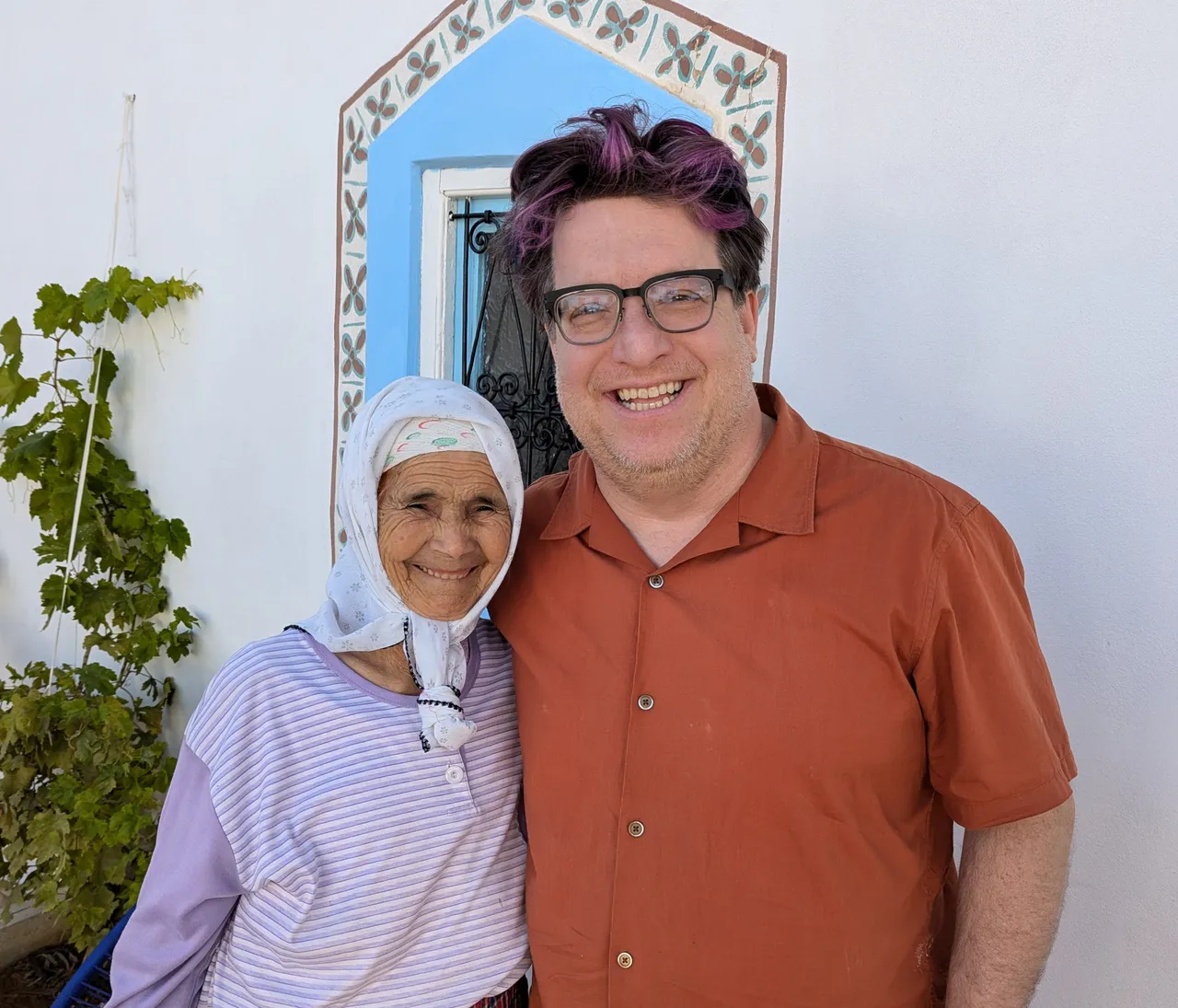
Aïcha is in her 80s, and still able to bend completely over to pick stuff up off the ground as she works on assembling the pots into a pile for firing. She’s incredibly skilled with the tools she uses (a flat wooden bat for throwing, on top of an inverted dinner plate or rock that provides a bit of a spin), using a coil building technique with local raw clay she digs out of the ground near her house. She’s been making pots for decades, and it was wonderful and inspiring to try for just a few hours to make a pot with her guidance (I got sick the second day of the visit, so I didn’t get to spend a lot of time making pots, which is a bummer).
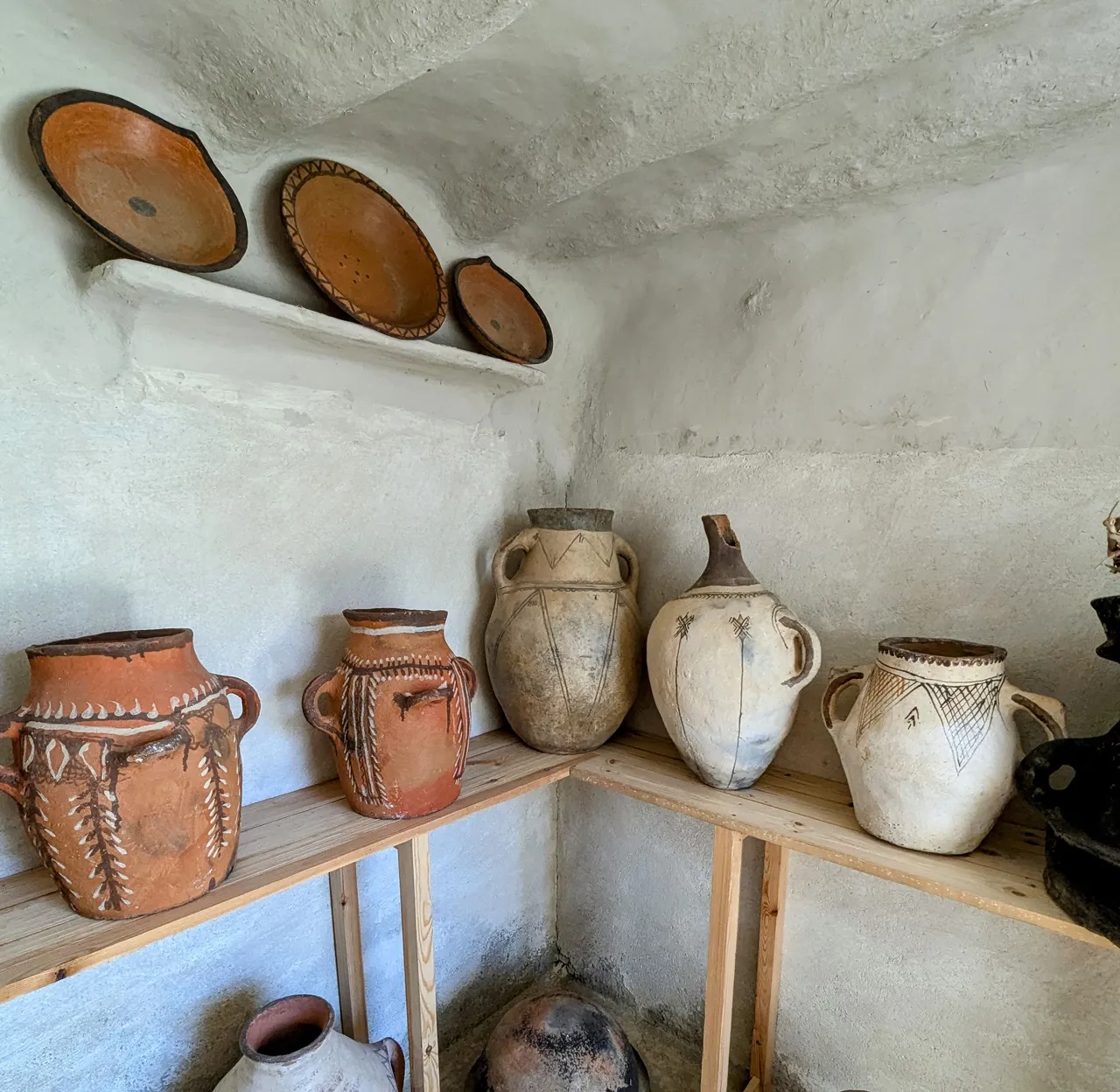
Mama Aïcha is a member of the Slesspeople, who have been living and farming and making pots in the Rif mountains for more than a thousand years. Let me tell you - the area felt lived in, in a way that I rarely feel in North America (for lots of reasons). This is a long tradition, and a very specific approach to pottery. When she holds a piece of clay, she’s able to shape it just right - starting with a base that’s formed from a ball into a rough cylinder before shaping and adding coils and smoothing as she goes up. I really wish I’d gotten a video of her working - I’m sure one of the other folks on the trip did, I’ll get back to y’all with whatever I can find.
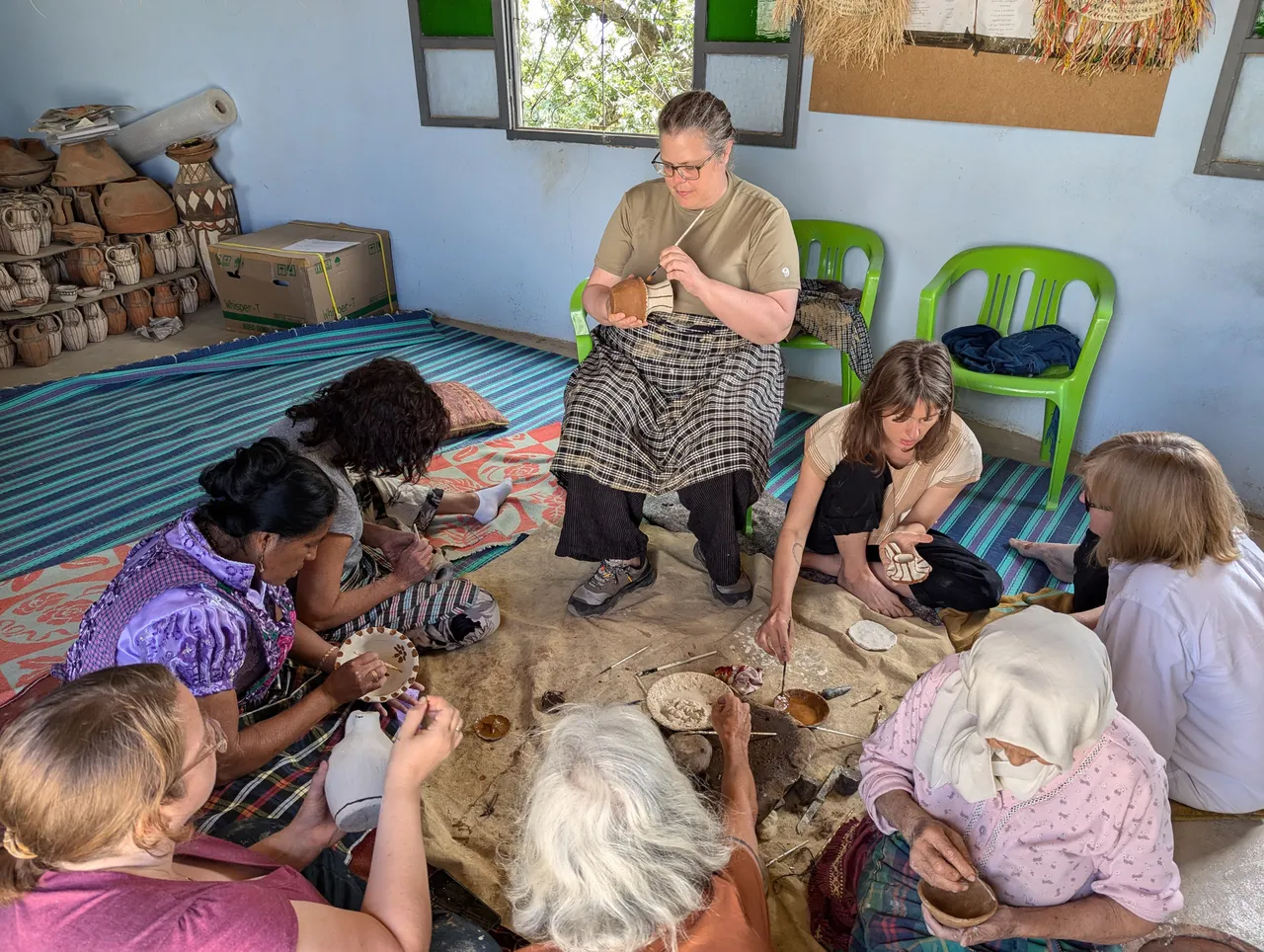
Here we are decorating the dried pots on the third day of the visit. We’re working on the floor, using brushes and ad-hoc brushes made by trimming goat hair to use them for drawing really nice straight lines. And… wait a minute. Computer, enhance.
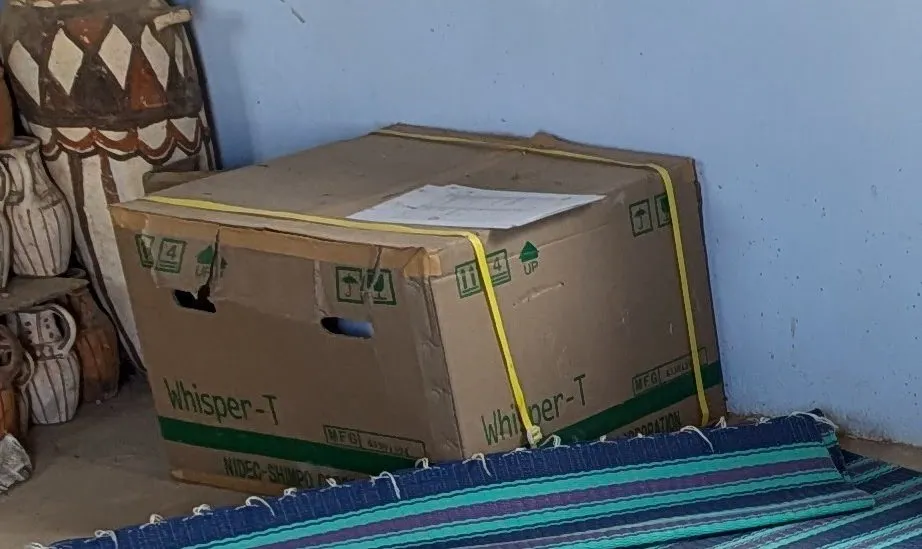
In the corner of the workshop is a brand new Shimpo Whisper-T wheel, still in the box. This is a really nice wheel, and probably would cost about $1200 or so new in the US. I have no idea what it would cost in Morocco, but the median annual income in rural Morocco is about 6,000 USD. This is a pretty significant piece of equipment. Why is it not out there, providing a place to work with better ergonomics and a nice smooth spin?
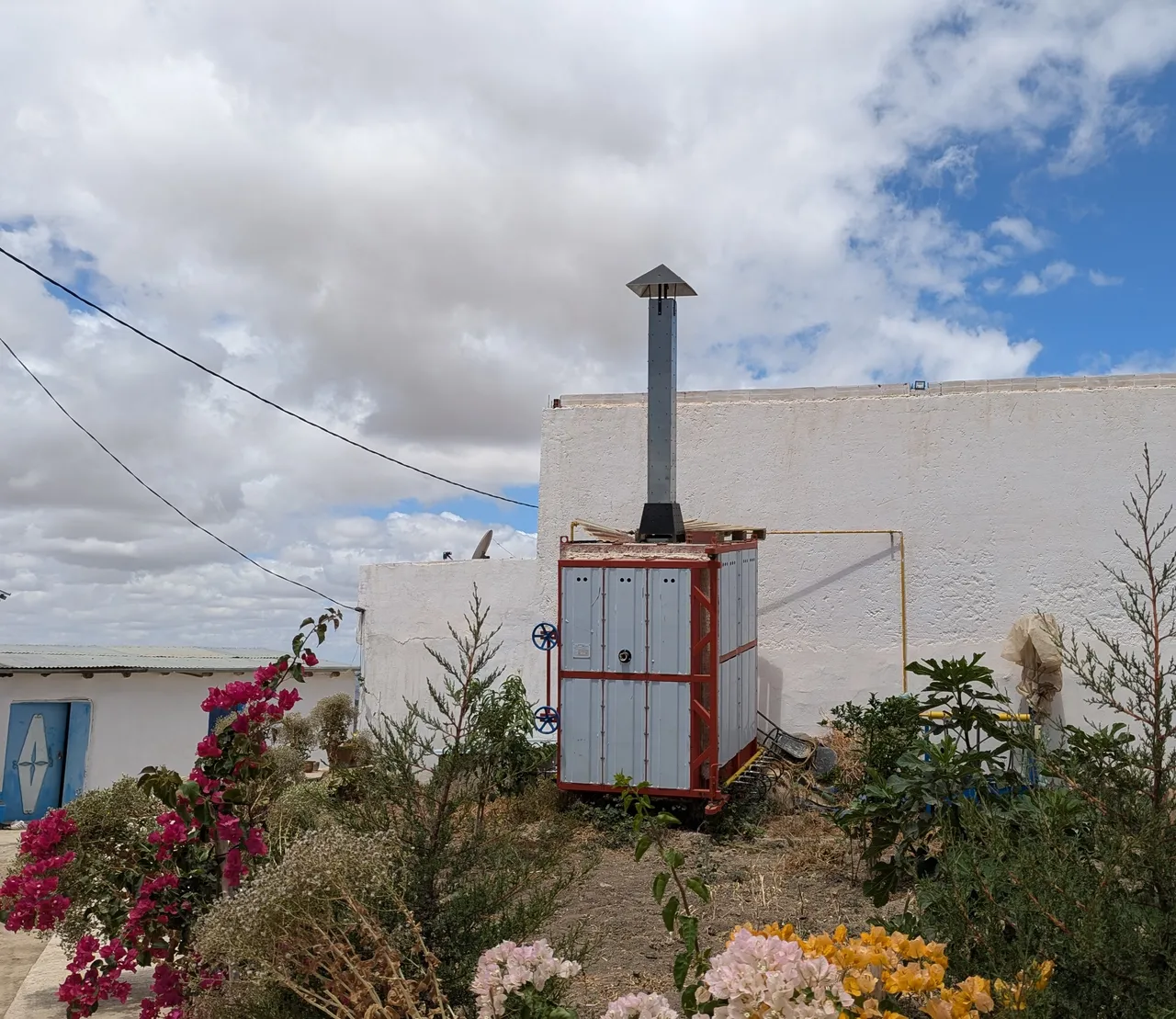
There’s also a new gas-fired reduction kiln. I saw this kiln and was like, “ooh nice”. We didn’t use it. We fired our pots like this:
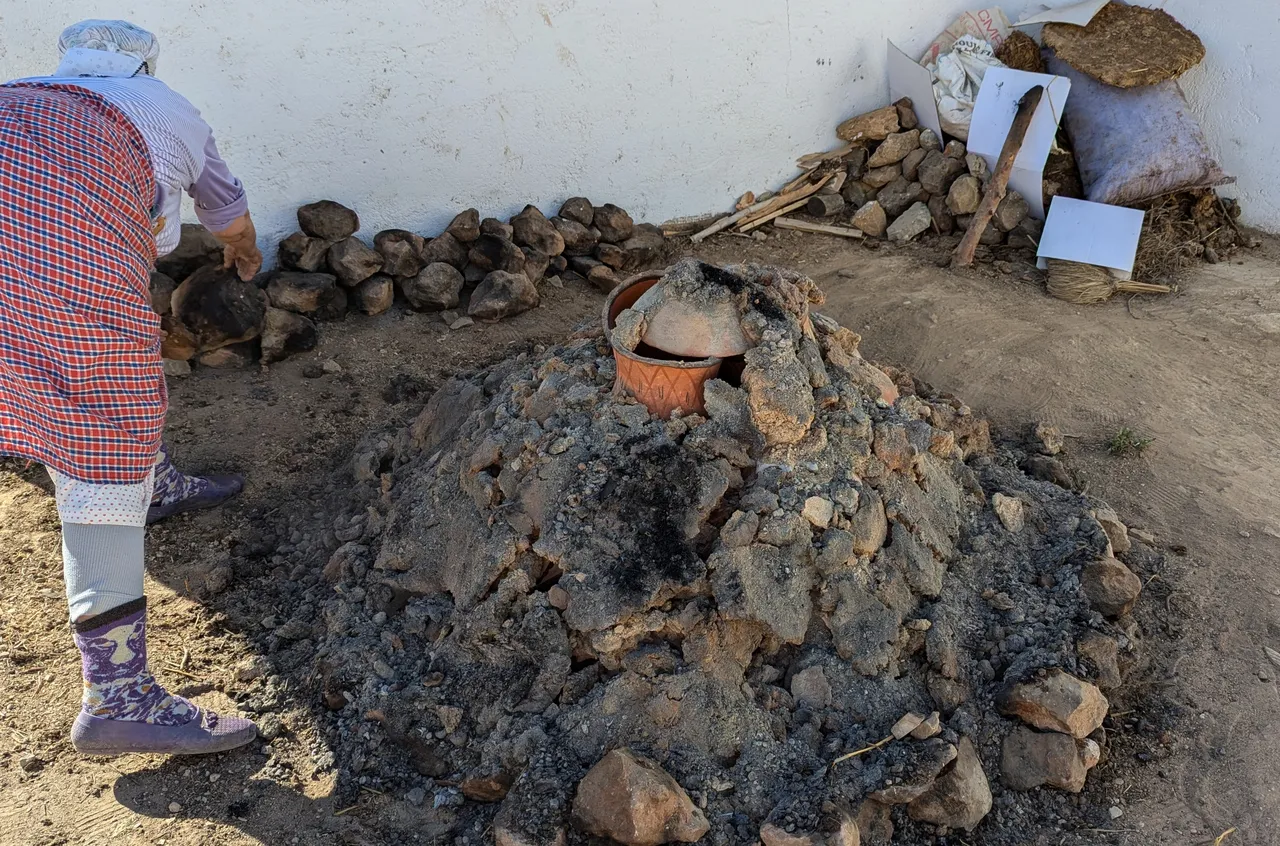
We piled them up, covered them in dung, and then burned the dung. Why did we do coil-building and raw firing when we had a wheel and a big gas kiln? Lots of reasons really. The kiln was donated by the government, part of an arts enrichment grant. It has never been fired as far as I was able to tell, and it’s actually sunk a bit into the ground and become unstable enough that there’s no way to safely use it. The family said that they looked into selling it, but who is going to get in a four-wheel drive vehicle to get up into the mountains to get a huge kiln? I have no idea how it got there in the first place. I assume that the electric wheel had a similar origin story.
Let’s back up a step. Mama Aïcha works with clay the way she was taught, the way she’s been working clay for decades, and her teachers and teachers’ teachers and so on going back centuries if not millennia. These techniques just don’t work with modern tools. More importantly, the clay wouldn’t work there either. The clay we used was raw and minimally processed, it had lots of little rocks in it. Throwing it on a wheel would be horrible. Sure, you could ship up ball clay and kaolin and then they could process the raw clay to make it more throwable, but then it’s just different. Once they did that - if they did that - they’d have to fire the finished work in that gas kiln, since the low fire wouldn’t work as well for this hypothetical new clay body. Did you notice the manifold on the kiln?
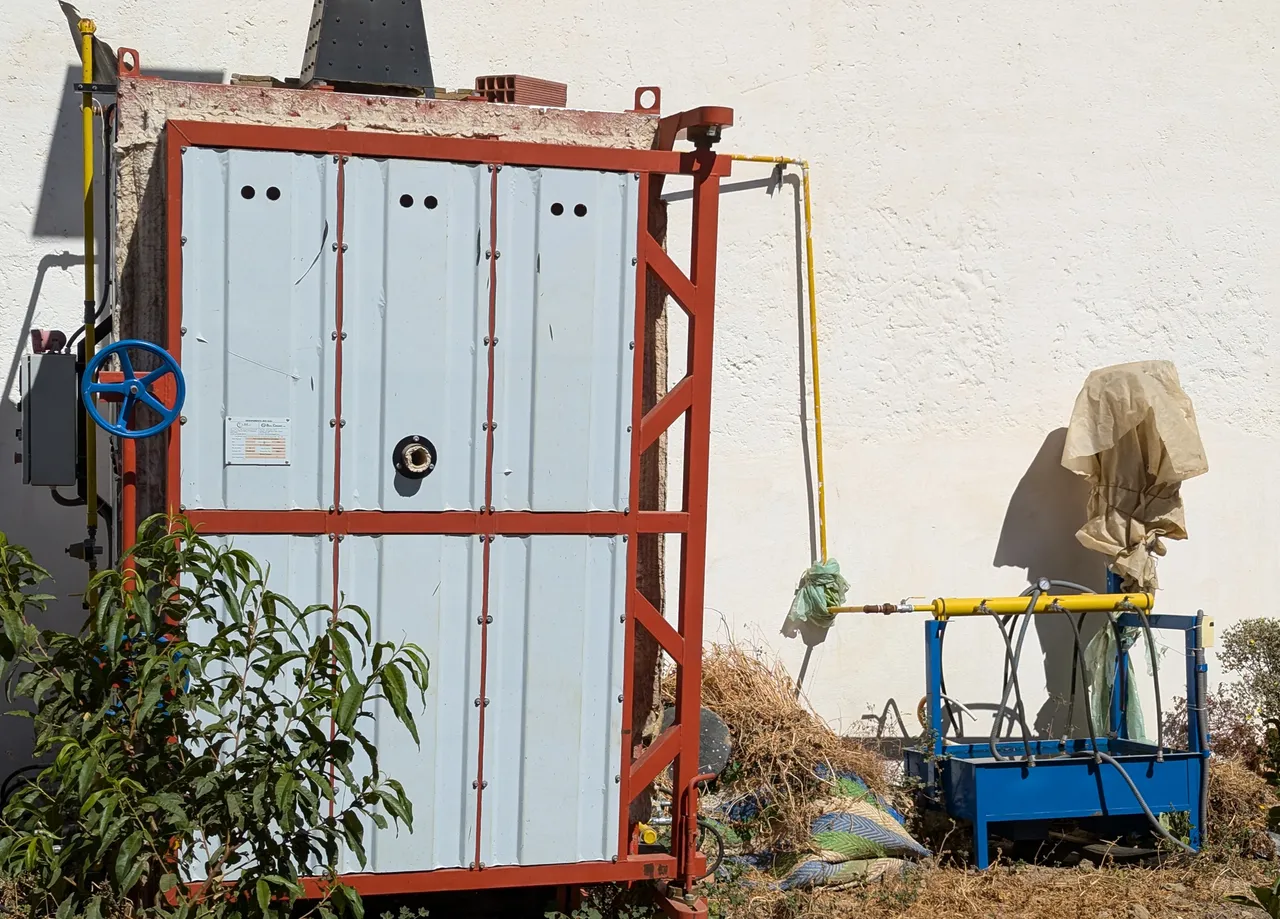
Yeah, to fire that kiln at best you need like six gas tanks - it looked like standard propane tanks. Usually these are wired directly into a natural gas line, but, you know, no natural gas lines out here in the village. You know what else they don’t have a lot of? Gas tanks in general. They have some - the stove ran on gas, but you can bet that it’s not cheap. And you know what they have a lot of, cheap? Dung. So use that.
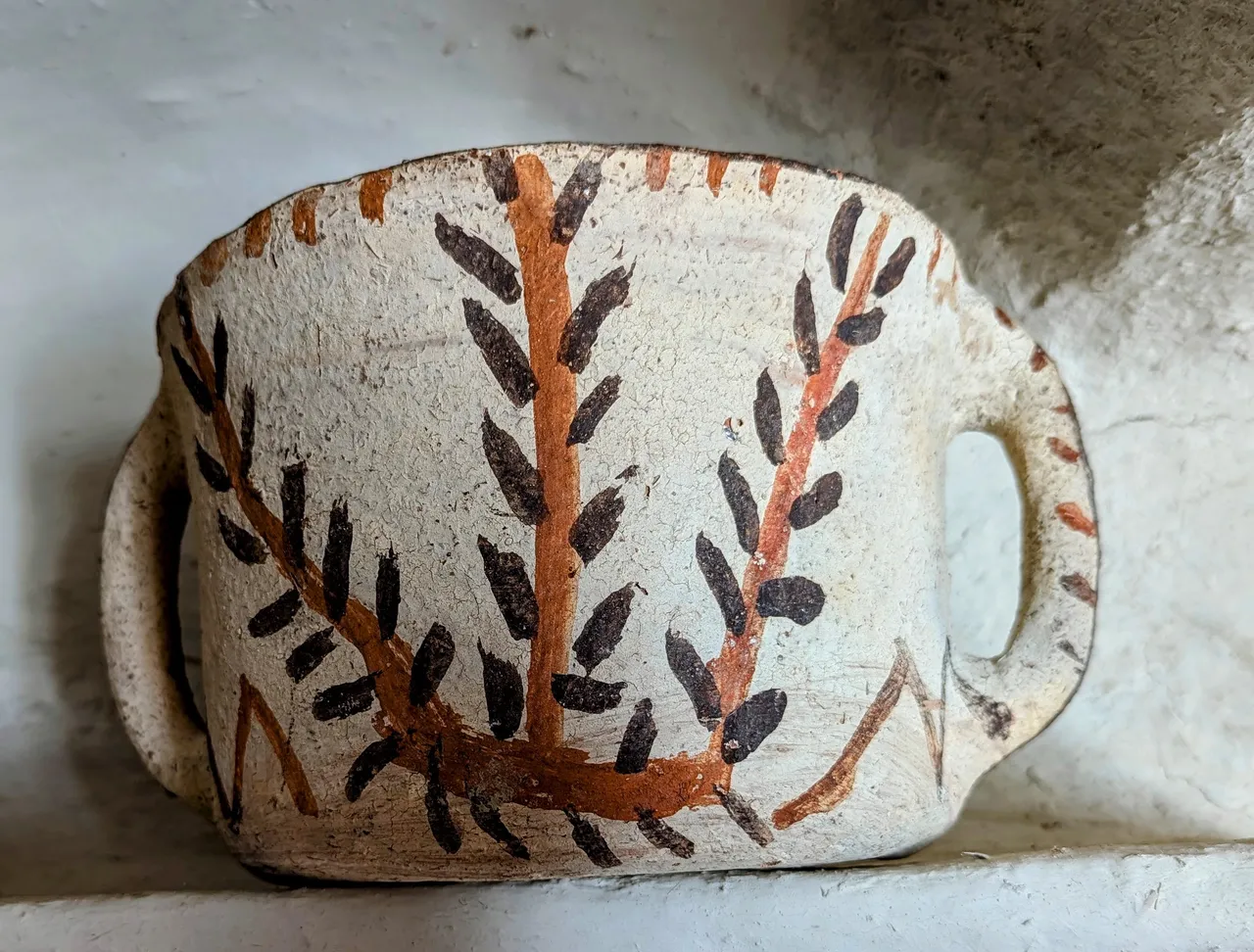
So anyway, we have this whole interconnected system - raw clay, coil built, decorated with other colored slips, wild fired over relatively low heat. It all works , and it results in wonderful pieces of pottery. You cannot swap out one piece for another and assume the whole system will continue to function the same way. If you ran enough electricity to put in an electric kiln for bisque firing, shipped in kaolin or some other additives, set up the wheel, and brought in a whole lot of gas for the glaze firing (oh, and also brought in glazes to fire at that time) you’d have a whole modern pottery studio here, and it wouldn’t produce pieces that look anything like the ones we saw and made.
These ways aren’t my ways, but they are beautiful ways.
Anyway, Mama Aïcha is, as I said, in her 80s. She also has no apprentice, nobody is learning from her to make pottery in this tradition. Remember how I said people have been making pots in this region in this fashion for centuries? One such line ends with her. Her sons have different occupations. Her granddaughter seemed to like working with the clay with us, but it was clear that it was just a fun thing to do. There are a few other Sless potters in the area, but not many, and there is no effort being made to preserve the art.
All this knowledge, all this skill, just done. Past tense.
Conversation happens inside — sign in to Overstory to read and write comments.