Making Baskets, Part One
You will probably see the whole Kishie build, end to end, in this post, but sitting and weaving a basket gave me a lot of time for Thoughts, so it will take a few posts to get through them all. If you don’t enjoy reading my meandering and self-doubt, well, just look at the photos and move on.
Upfront: I love experiencing other people's cultures through food and craft. I am definitely an outsider- for a long time my hat of choice was this thing I called the Hat of My People (or homp), which was a faded blue and white tropical print bucket hat I bought in a dollar store while on Oahu, it is so clearly a “this is a tourist who needs sun protection” hat that I wore it to be that. I hope it also communicates a little of “this guy does not take himself super-seriously”, which I try to project as well - I know I can be intense, so to wear a hat like that is to add a little self-deprecation to the intensity. I’m intense because I’m interested, curiosity drives me. Anyway.
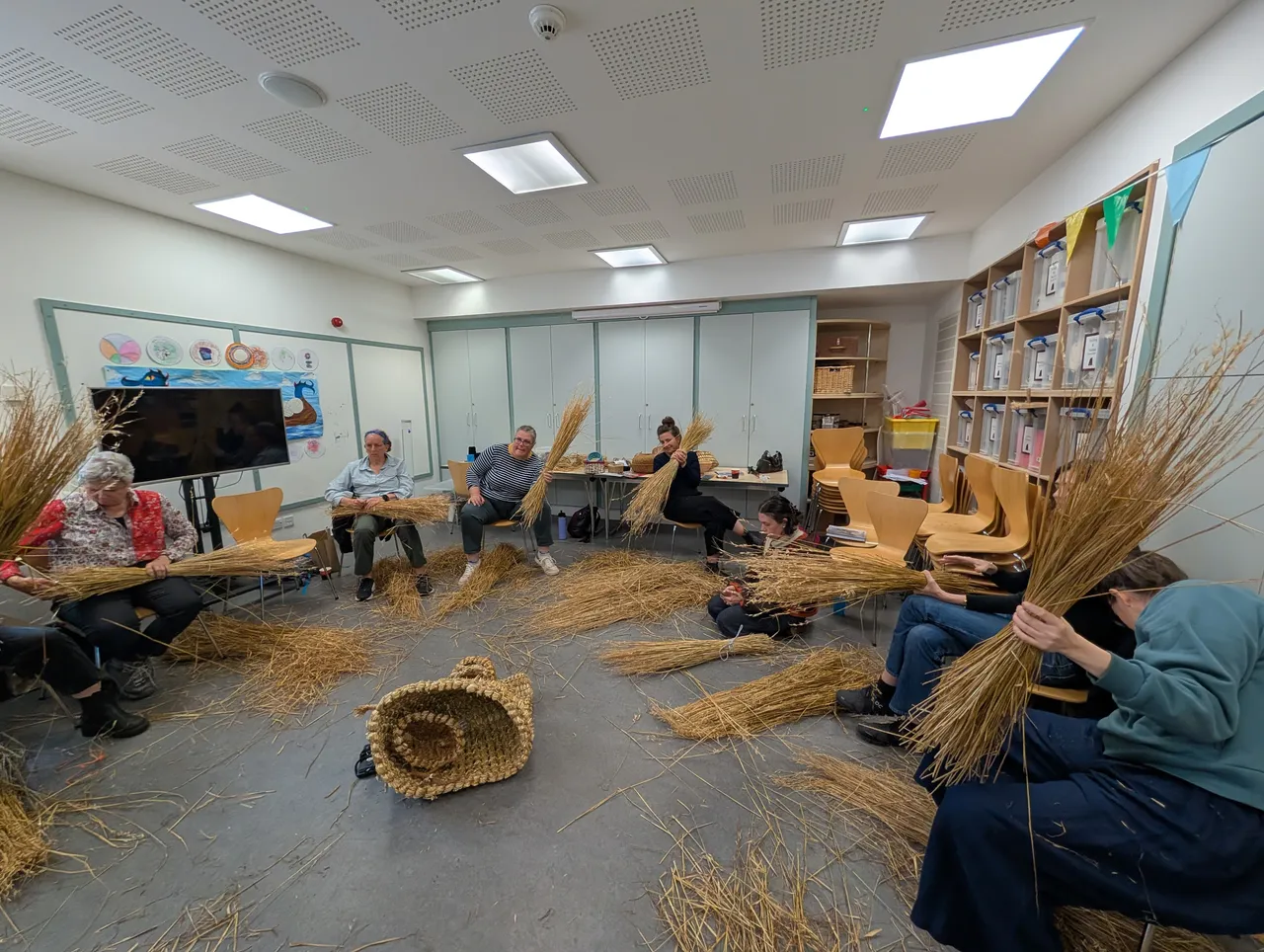
I am grateful when people share their cultures with me; when I travel I love taking cooking classes, these Thread Caravan trips are another form of this- we traveled to Morocco and Scotland (so far, I’m sure we will have more in the future) to other lands, other crafts) to learn from artisans who follow very specific craft traditions. This leg of it has been the Kishies and techniques of oat straw weaving. The artisans and artists who taught me on this trip were generous, kind and wonderful humans, who invited me to participate in a very specific form of craft, and I just couldn’t stop thinking about cultural appropriation.
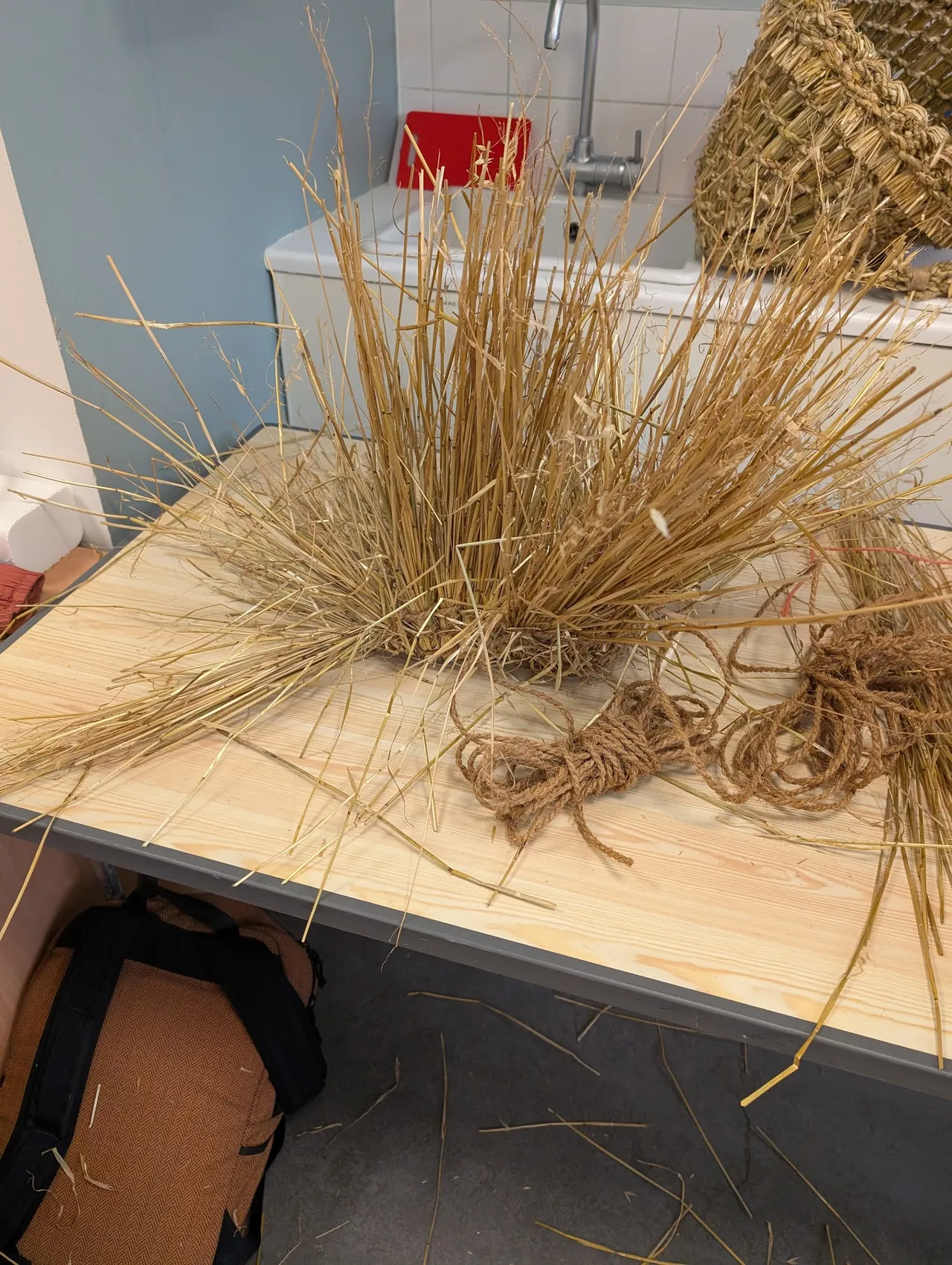
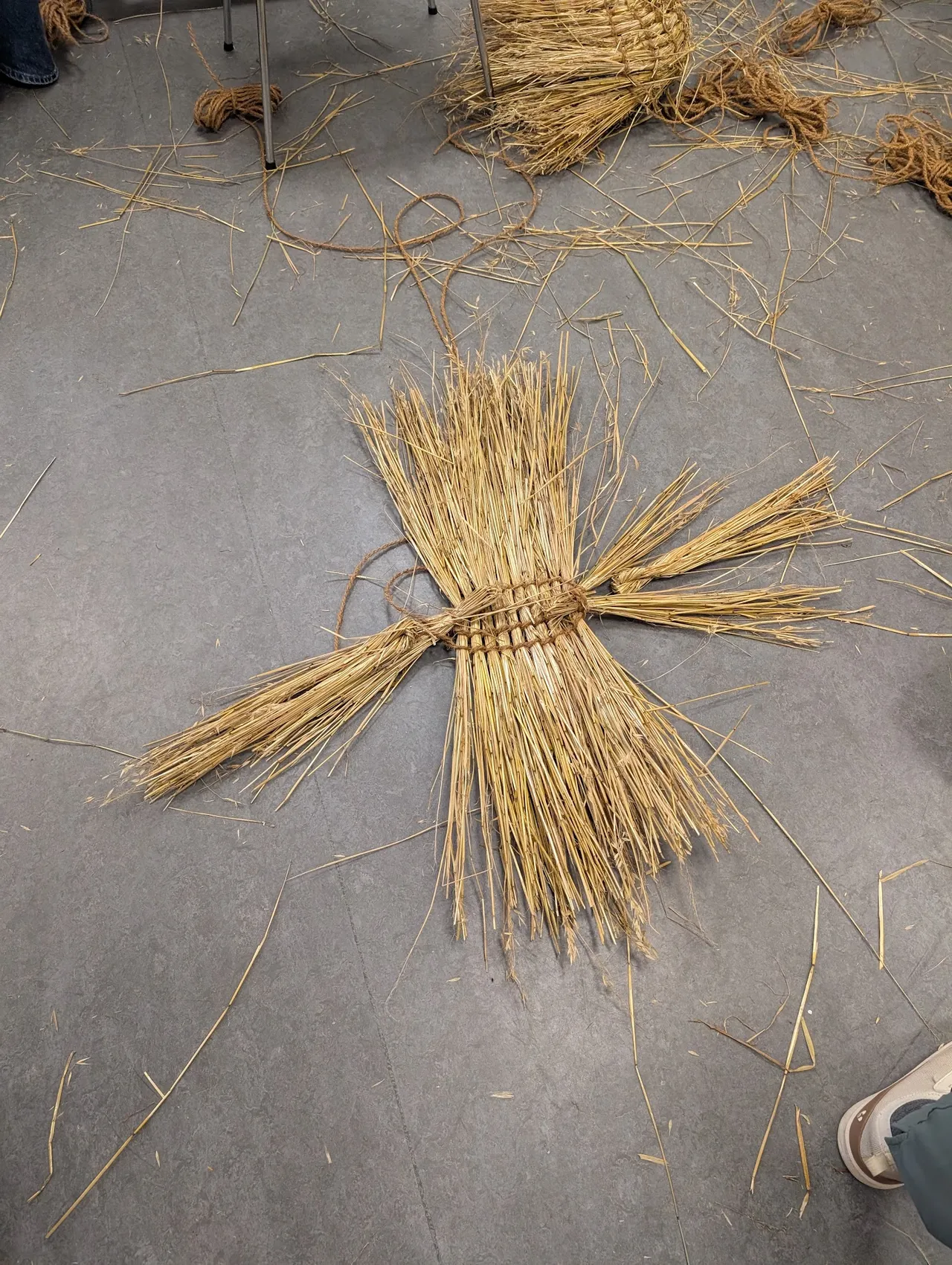
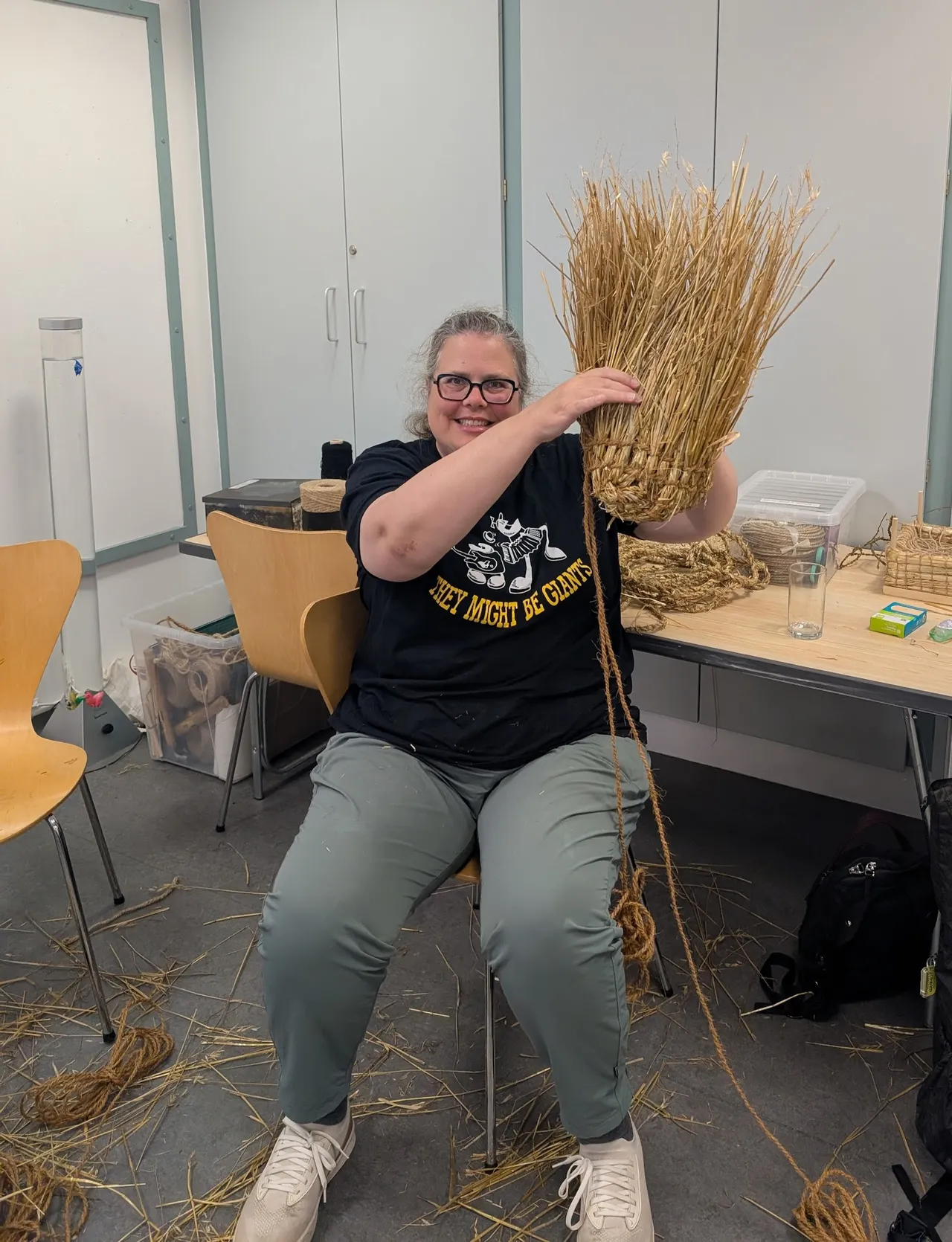
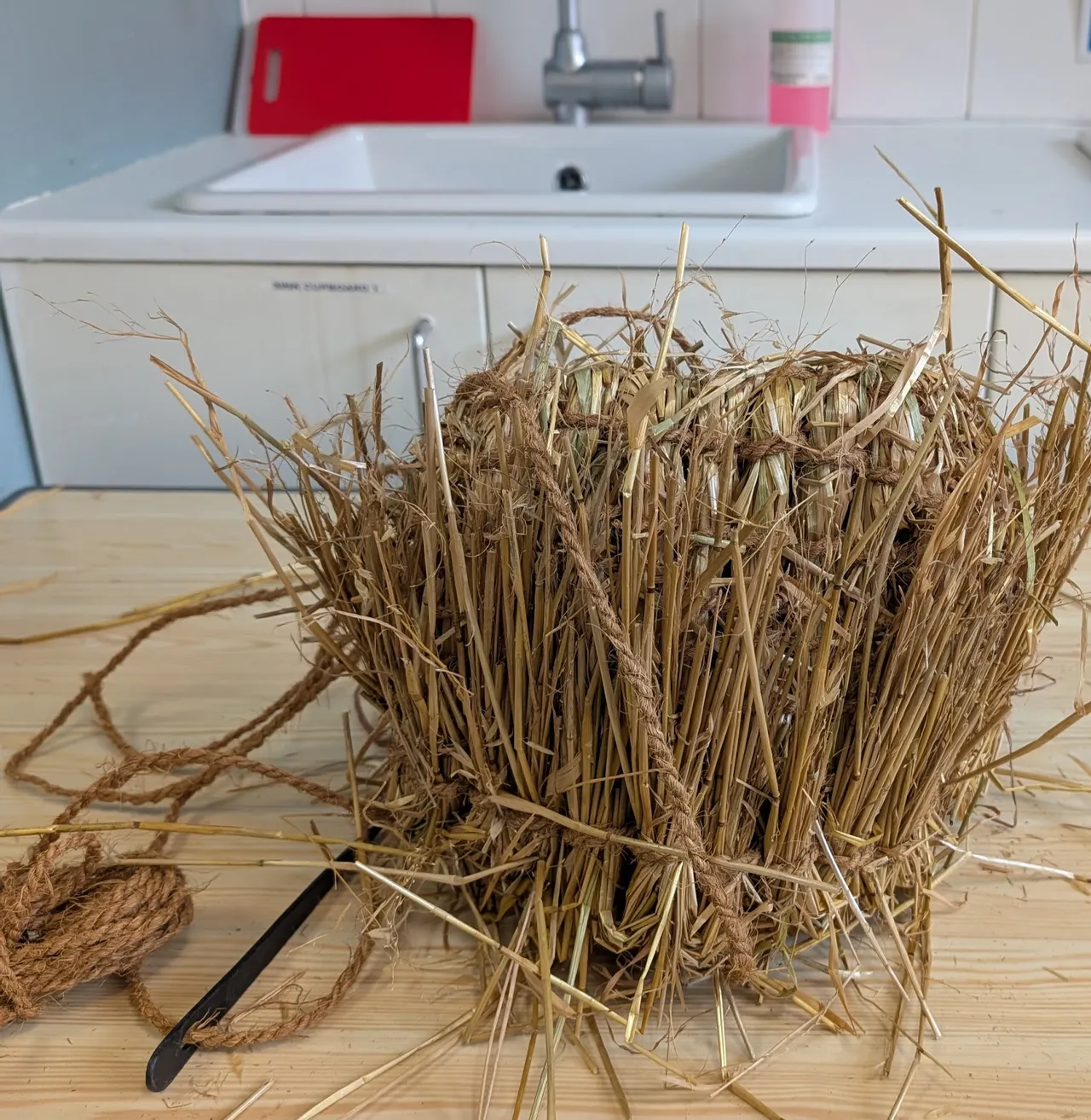
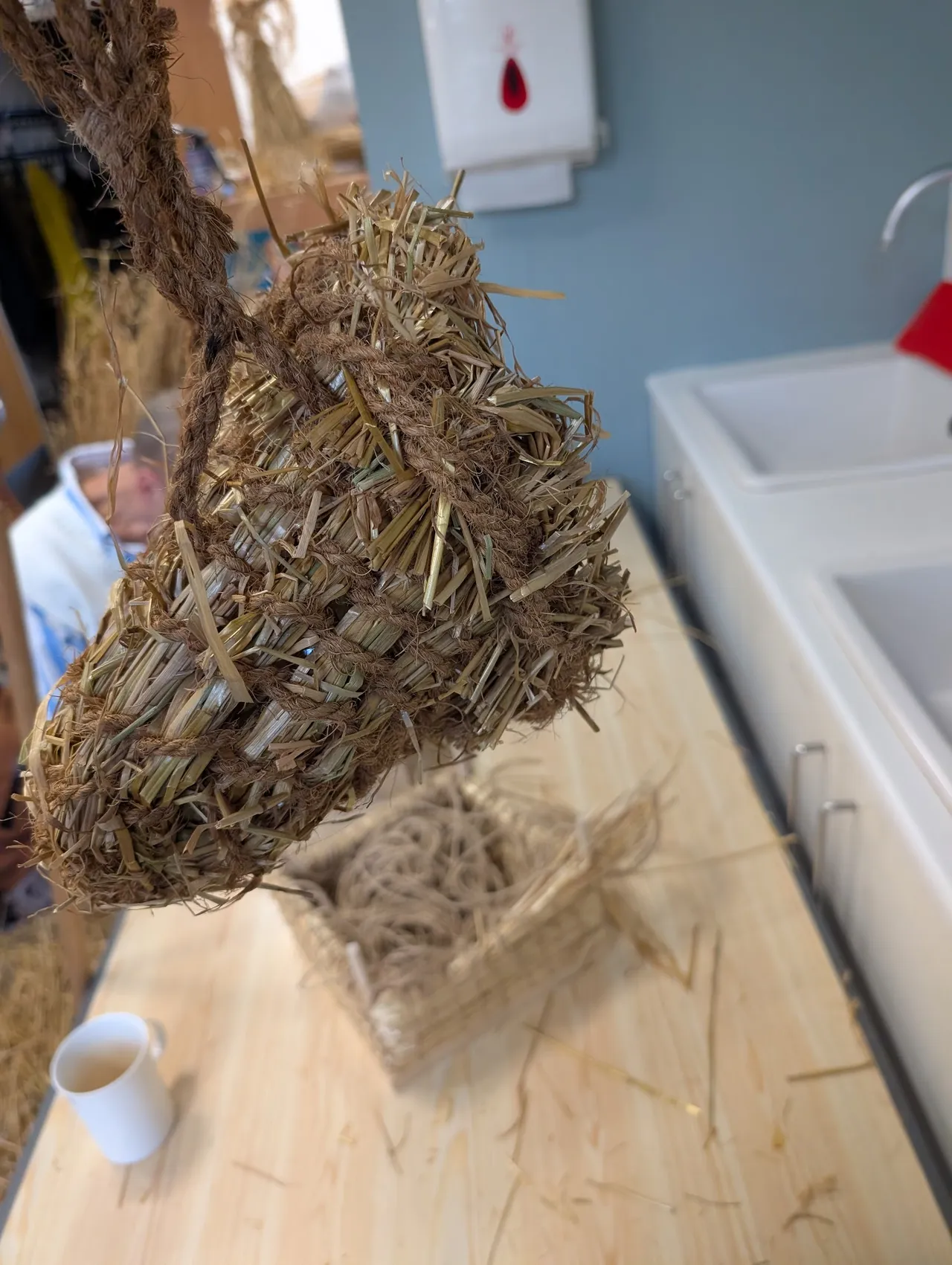
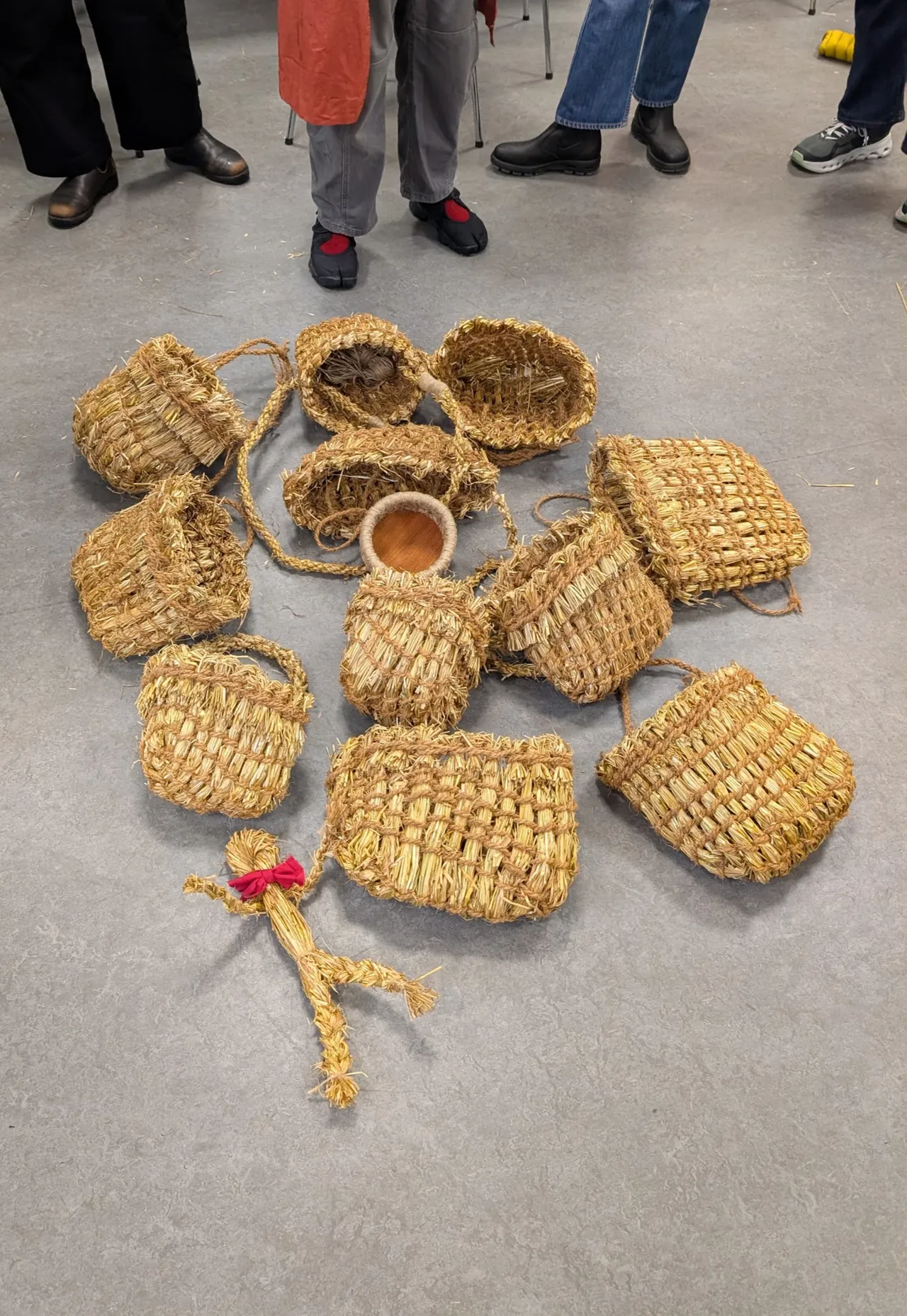
Kishie is a name for this particular kind of basket, it’s repetitive to say “Kishie basket” actually, but since most people don’t know the word (I sure didn’t) it’s easier to explain that way. It is, first and foremost, a practical object. It is crafted for a purpose (carrying things, usually cut peat or fish), but probably was used to carry whatever is needed. Both Wikipedia and the Shetland Museum support the idea that, while oat straw was the most common material, other materials were also used (rushes and a type of tule, both of which grow wild in Shetland). When I asked Catherine why she didn’t work more with tule (which is more supple and has better water resistance), she said mainly that she couldn’t gather enough, and long enough pieces to really make good baskets. It’s a matter of availability rather than (say) cultural or religious production here.
It is something of my nature (my artistic tendencies?) to learn to do a thing, and then to immediately try and think about how I might want to alter that thing, change up the process a little to make it my own. When I bought the Dishoom cookbook, I took it home and tried cooking Chicken Ruby. The first time: it was great, I followed the recipe directly, even the fiddly steps where you make a spice mix and then only use two thirds of it and save the rest for later. The second time: it was pretty mid; I had tried to optimize the process and I clearly broke something in the spice development by reducing the time some stuff spent in the pan, or by changing the ratio subtly when I couldn’t add two thirds of a clove and eyeballed it. I went back to following the recipe thoroughly. On the other hand, a lot of my cooking is fusion- I take bits from Indian, Indonesian, Thai, Chinese cooking classes and books and mix them in with whatever I do. Is this appropriation? I’m just cooking for myself, I’m not instagramming or tiktokking this for clout, I’m not making a restaurant that’s called “Eric’s Restaurant that Makes Great Indian Food” while being a White guy. But still, it sometimes feels like a dirty secret.
On some level, to be a White American is to be an appropriator. My ancestors drifted away from their ethnic heritage- I make something like colcannon on Saint Patrick’s day (and on other days throughout the year, it’s delicious) not because I learned Irish peasant cookery from my Grandfather McCann, but because I tried some in a Trader Joes and was like “this is delicious”. This is not particularly insightful, better people than me have talked about this. One of my travel companions is Potawatomi, we talked about Braiding Sweetgrass, and I talked about this feeling of disconnectedness. On the other (or third, or fourth) hand, it’s also hard to really capture this feeling of disconnectedness without also sounding (internally) a little whiney. I’m the product of imperialism and oppression- my ancestors stole land and people, they made cultural memory a prohibited thing. We also forgot our own memory along the way, but maybe this is just the payment due.
This is what it is like to be me: constantly thinking about everything. I’m tasting my disconnection from my history, my people. I’m regretting that my ancestors stole so very much, I’m noticing all the privilege I retain that derives from that theft. I’m wondering how much I can adapt a Kishie making technique to other materials without it being A Big Thing. This is probably why I make pottery the way I do. I want people to see my pottery and feel a little uncomfortable, I want them to spend all their time thinking, “but what is it for?”
Meanwhile, Catherine is super-excited about my ideas to make baskets out of materials close to hand. When I talk about my weird approach to ceramics, making pots that try to make people feel uncomfortable, she immediately follows me on Instagram. Other tour folks, when I talk about this, point out the practicality of the Kishie, that it’s made from straw because straw is what was there. They point out that we were invited in to share here, and that I’m not going to go out and start teaching Kishies or taking away from the work that the Shetland Straw Society is doing, but instead maybe I could use my (miniscule) reach to amplify their work as much as is feasible on a blog with maybe a handful of readers.
I’m really overthinking this.
Conversation happens inside — sign in to Overstory to read and write comments.