June 24th: Oban and such
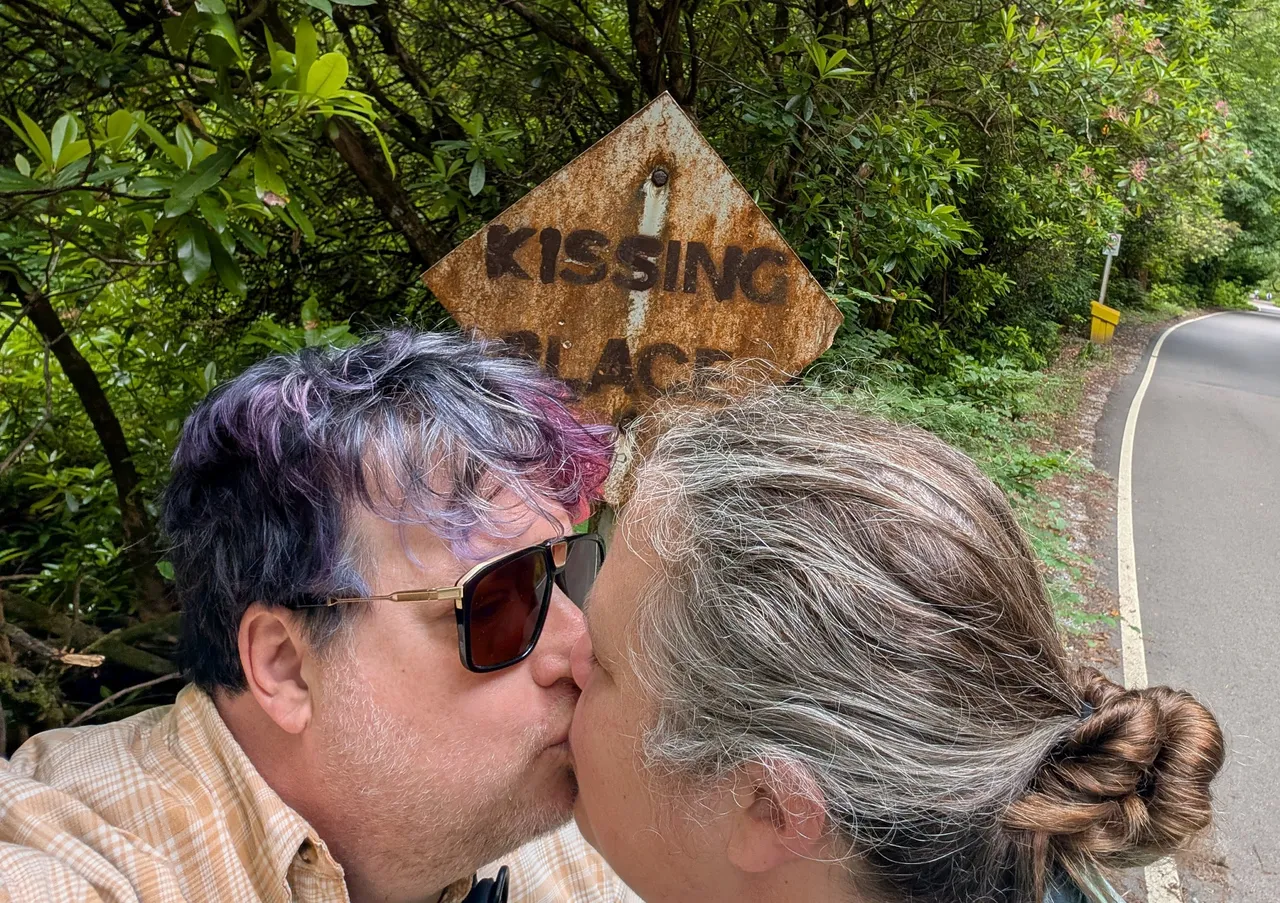
June 24th is our anniversary, hooray for us! Thanks to Betty for leaving a "happy anniversary” on the blog comments as well. We started at the Faichemard Farm campground in Invergarry. The original place we were going to stay was a camper stop about 15 minutes up the road, but although there were spaces, it was pretty primitive - just gravel place to park and power. No water, toilets, or dishwashing. So we found this next place, and it was a winner. This should have been in the June 23rd post, but I wrote that post on my phone waiting for a bus ride into Oban and missed some stuff. More on the bus ride in a mo. This campsite was pretty grand, lovely views and an explicit “no kids” rule. Unfortunately instead of hiking around we spent most of our free time in the laundry facilities - like a lot of places we’ve done laundry while camping, the dryers just didn’t dry. I suspect there’s a family of something living in or near the vent, and so there’s not a lot of air. We ran the dryer for about an hour before giving up and spreading our clothes out all over. Okay, caught up to the 24th, having written more about the 23rd on the 25th. Humanity has such a talent for retrospection.
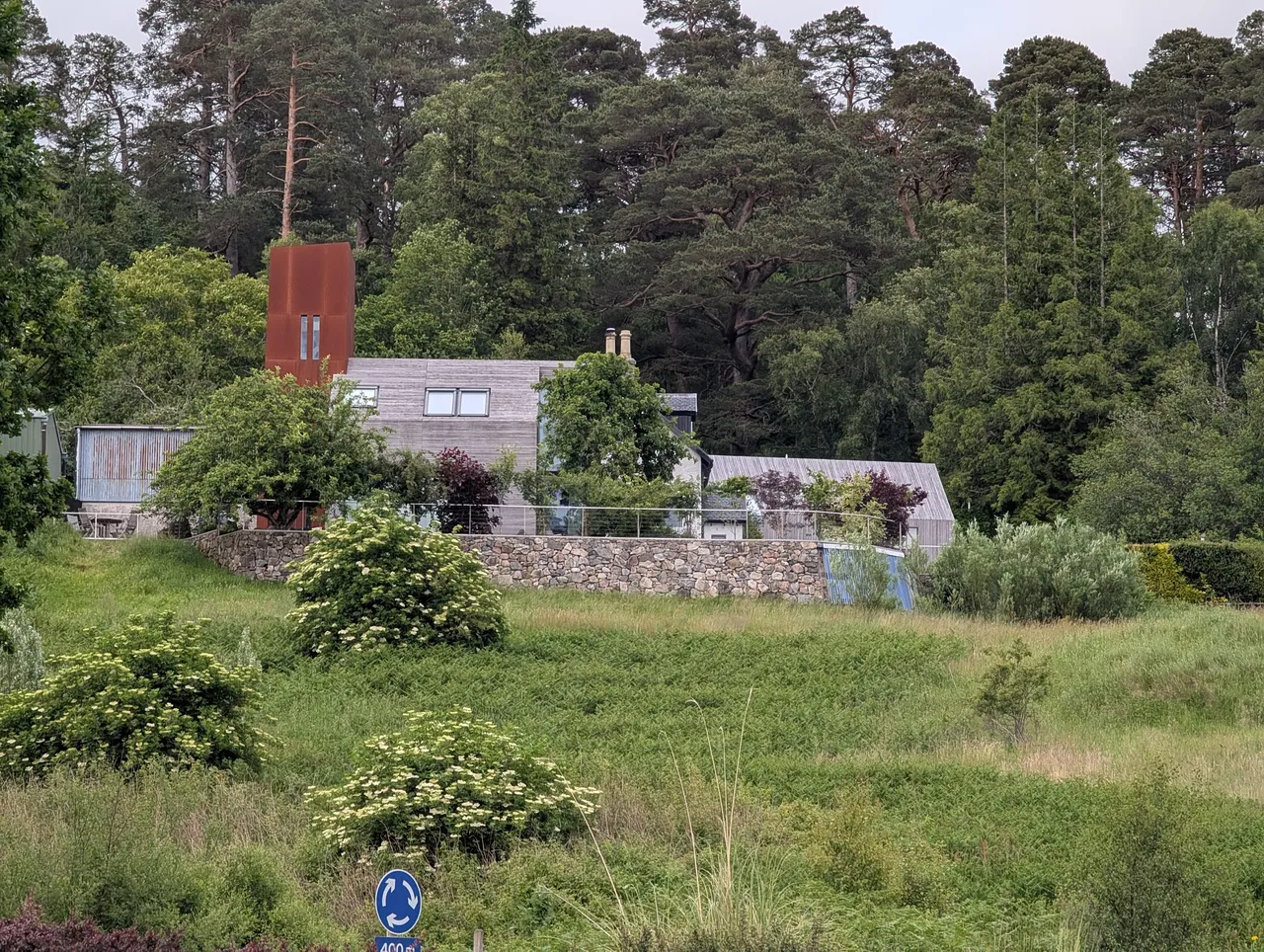
Where was I? Invergarry. There’s a lot of towns named Inverwhatever, because Inver is more or less “river” in Gaelic. So Invergarry is near the river Garry. Inverness (where we were yesterday) is near the river Ness. There’s also a big lake on that river, we drove by it on the 23rd as well, but did not observe any of the speculative megafauna. We packed up from camp and headed towards Oban.
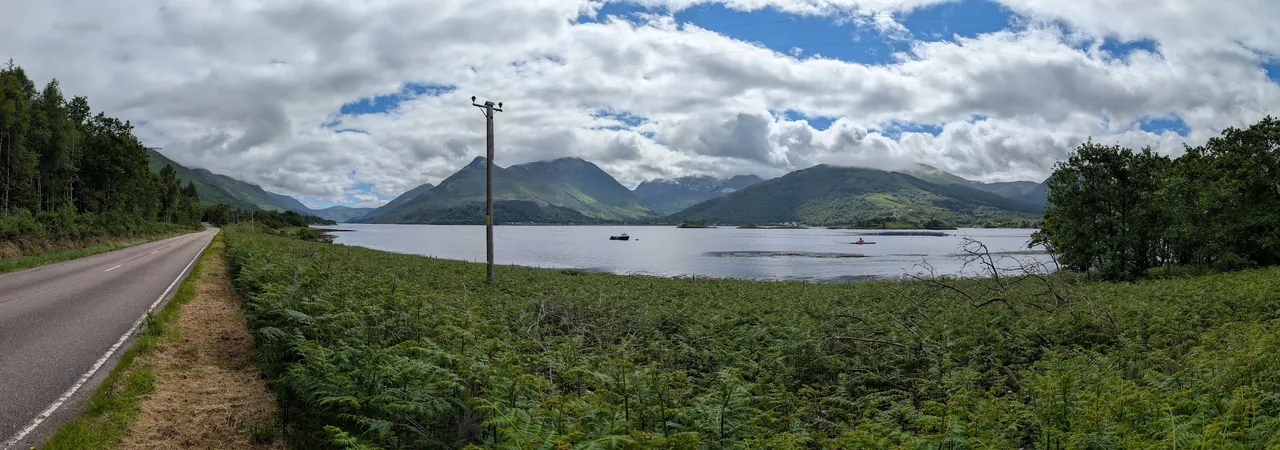
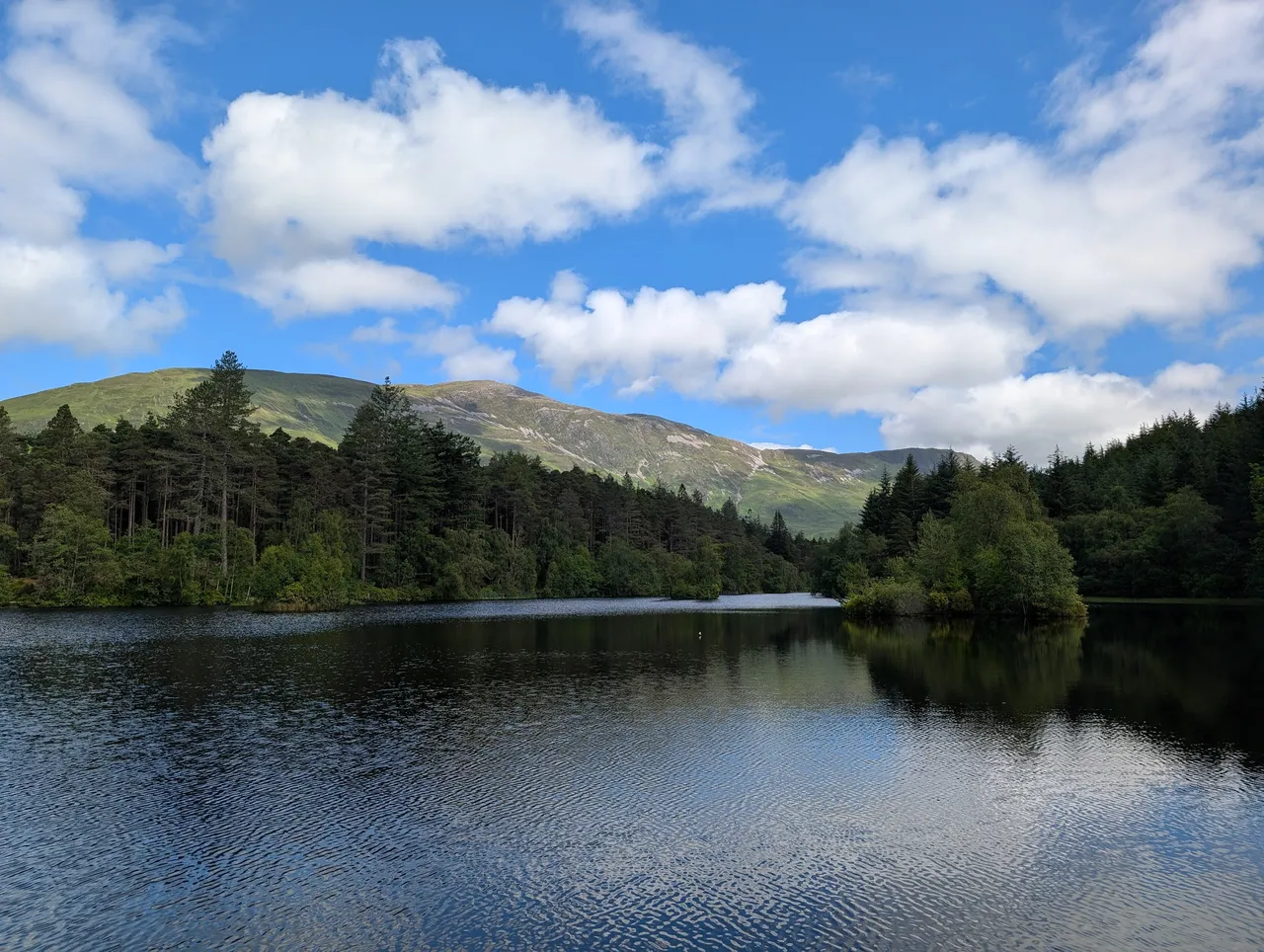
Along the way we stopped for a hike in the Glencoe valley. Which I guess is as redundant as saying Inverness river. Just Glencoe I guess. Glencoe is famous for its massacre, during which time the (king’s) army being billeted in the area basically just decided to slaughter all the families they were staying with because they were Scots and therefore the enemy. I don’t really understand humans most of the time. Anyway, Glencoe is beautiful, and the hike we went on was up to a little man-made lake and engineered forest. The local rich guy who put the lake and forest in had married a woman (Isabella Sofia Hardesty) from the pacific northwest in North America, and he wanted her to feel at home, so he planted a bunch of it coast redwoods and stuff in the 1890s.
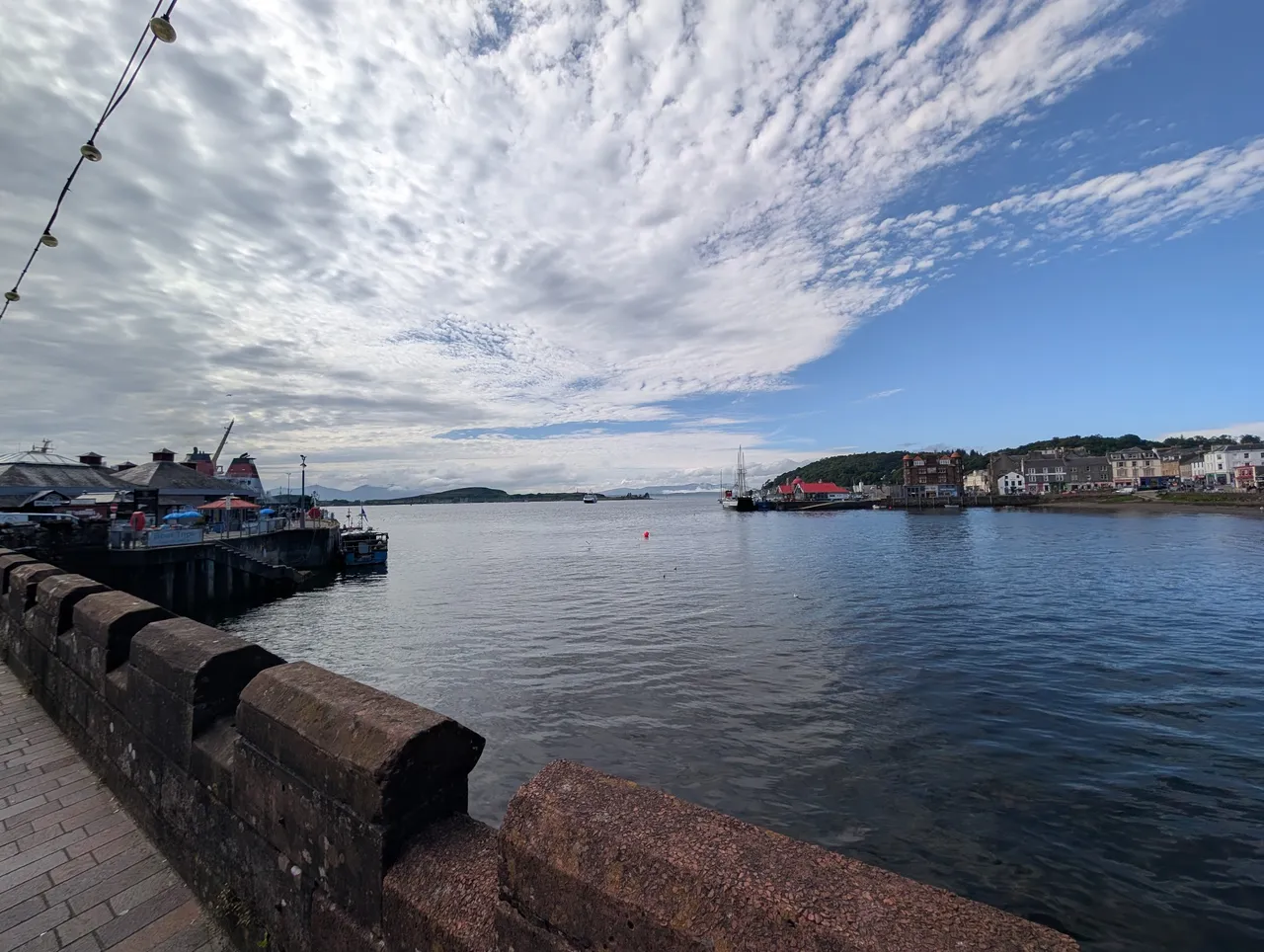
After Glencoe, we got to Oban, which was a lot more busy than I’m used to. Driving through the town was a bit much (people everywhere, although there were also pipers playing to the tourists, of whom I was one, so I appreciated that) - we went out the other side, two miles up the very twisty coast road to our camper site. Nothing special there - it was near town, it had nice views but also was under a boil-water rule which they don’t tell you about until after you book. We have a tank in the camper so we were fine. I was extra-careful in the shower just in case; I’ve had pretty bad bacterial whatnots on my last two international trips, I am not going to spend a day here in bed with a 100+ degree fever.
Oban had been a pretty tiny village until the distillery went in, one of the oldest in Scotland. The town grew up around it. We took a bus from the campground back along the twisty one lane coast road (and boy howdy, was the bus driver aggressive in his lane ownership, I could learn a lesson from that dude). Consider that the whole road was basically one lane total, with passing places every so often; whenever we came upon a car in the opposite direction, the bus would stop and wait for the other person to pull over. The best thing about this bus is that it runs twice a day - 8am and 4pm and is mostly (apparently) for school purposes (it only runs on school days). Lucky us, we hopped it and rode down, we’ll end up taking a taxi back up to the camp.
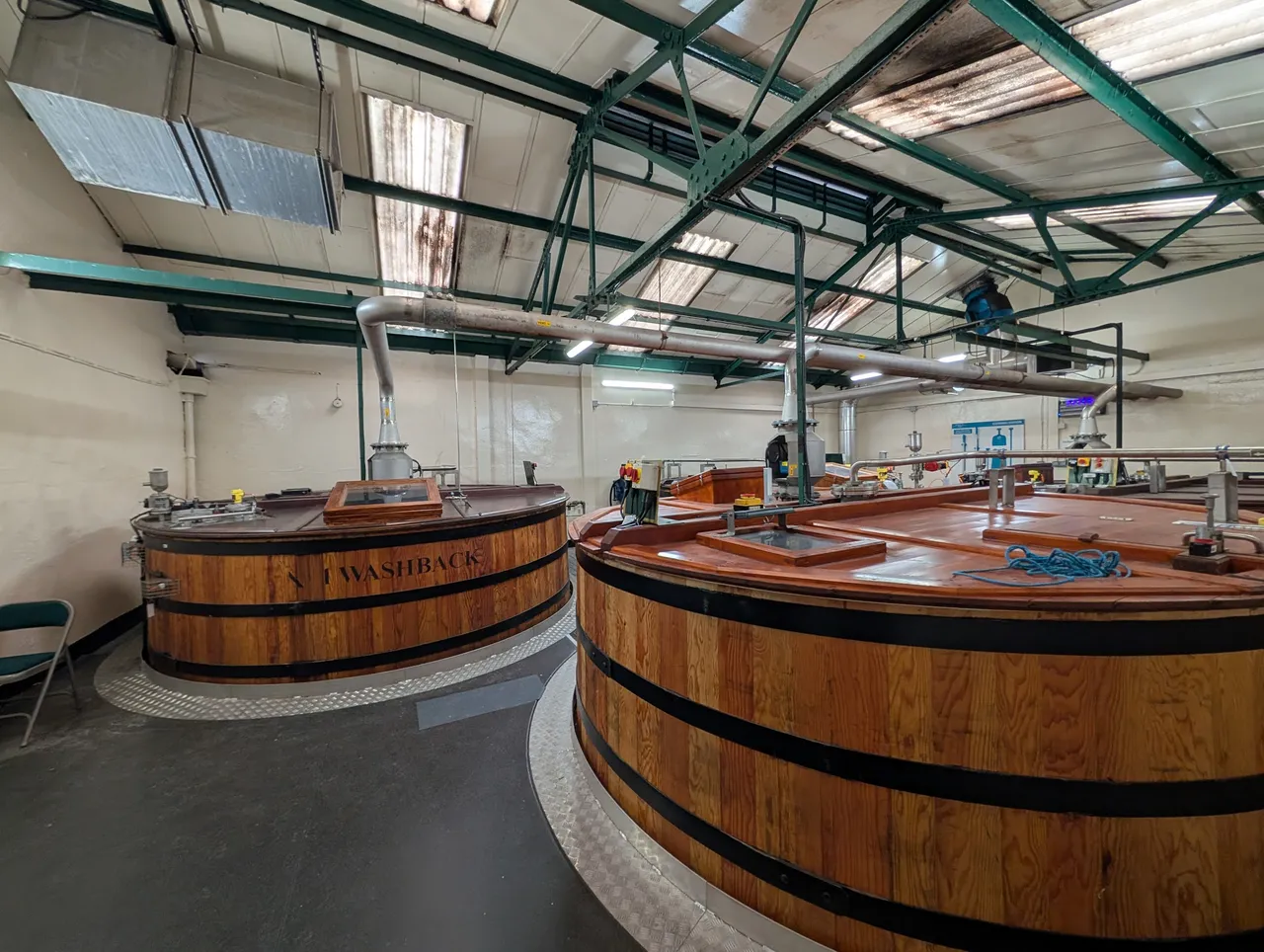
The distillery tour was very good - informative enough that I learned stuff, and the guide was willing to answer my weirdly specific questions. When they say “single malt” they don’t actually mean a single grain or anything (the way a single hop beer might use the word single) although it is basically a single malt (there’s no point in using weird caramel malts for flavor or non-fermentable sugars as most of that flavor gets lost in the distillation). What the mean is: one malt → kiln → mash → ferment → distill → barrel pipeline with no real mixing between batches or years. The flavor in whiskey comes from a couple of places: for your smoky whiskies, the kiln-drying step between malt and mash can be done using a peat fire. Most highland scotches are not very peated, but they also get flavors from the ferment and barreling. During fermentation, they can run a little long and hot on the ferment, which gives some extra flavor that makes it through distillation.
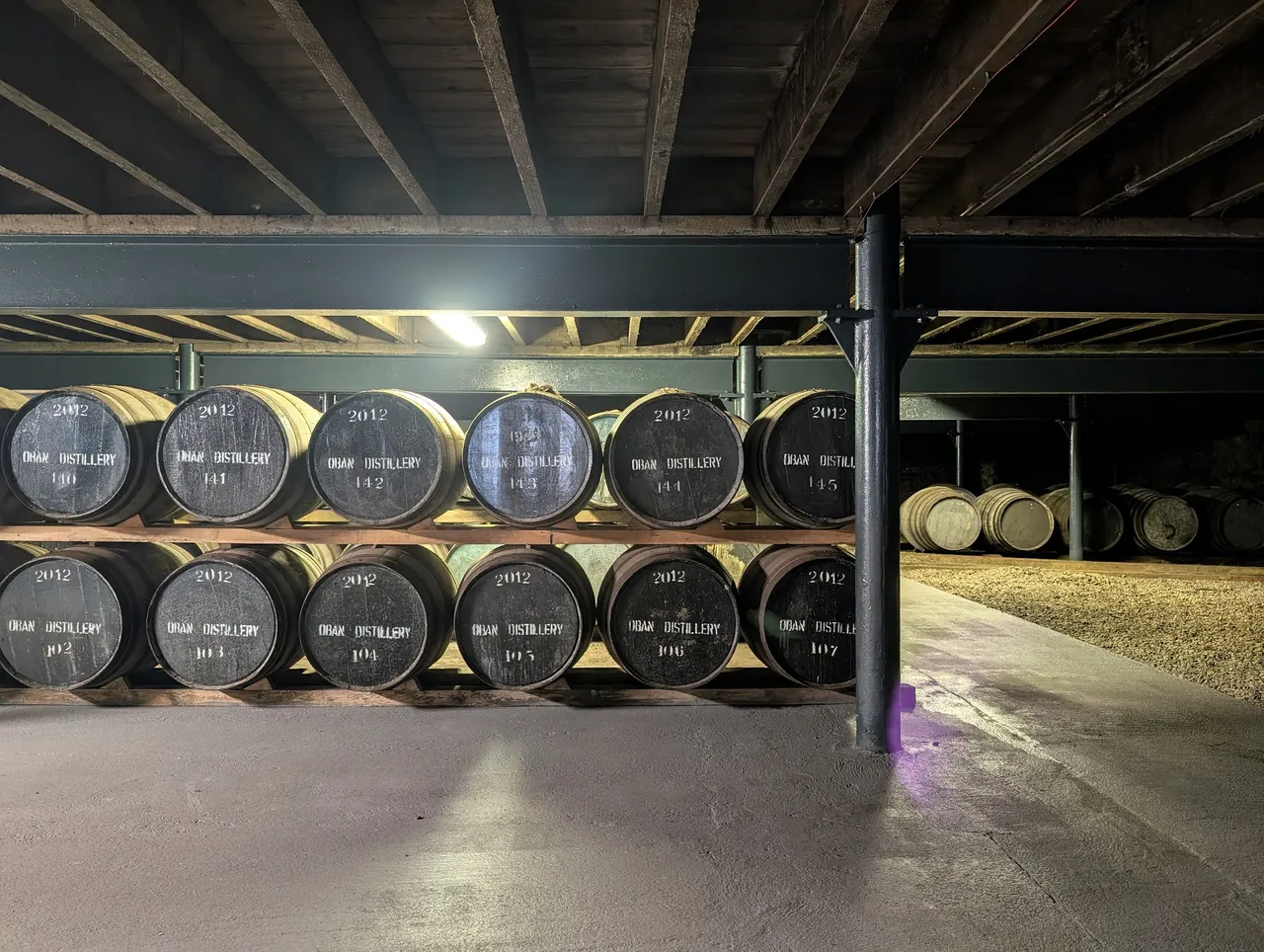
Post-distillation, the pre-whiskey is stored in oak barrels for a long time (usually 12+ years). This is another source of flavor - the wood itself imparts flavor (and the characteristic color), and the barrels they use are almost always previously used for some other purpose, so some of the flavor of the sherry or whatever leaches into the wood and then back out into the whisky. They use a lot of American bourbon barrels, because (a) the American white oak barrel is really durable, useful, and has a good flavor, and (b) there’s apparently an American law (from the early post-prohibition era) that Bourbon must always be casked in a new barrel. This was done to protect the cooper trade I guess. So anyway, the US bourbon industry makes a lot of extra barrels, which the Scots get on the cheap. Some of the other barrels, like the sherry ones used for advanced flavors, are getting hard to source - not as many people are drinking sherry, so we don’t make as much, so we don’t have too many sherry barrels to reuse for whiskey. The circle of life or something, I dunno, I like sherry a lot, I guess I should drink more.
Anniversary dinner was at Cuan Mor, right around the corner from the tour. I had the fish pie, Chrissy had fish and chips. There was discussion of the pulled pork macaroni and cheese, but I figured, we’re traveling to Scotland, we should eat the local pub fare. The guys sitting right next to us, who by their accent were local-ish (I mean they were Scottish, I dunno if they were from around Oban, probably not), ordered a cheeseburger and a rack of ribs. We all travel in our own ways, and the fish pie was fantastic. Sorry, none of the food photos turned out. I also had my first actual scottish ale, Caledonia Best. It was decent - when I compare it to the 50/- ale I brewed at home, it was pretty similar (although this was served on nitro, which added some body to it that mine is lacking). There’s a very specific flavor in the beer there (I assume it’s some kind of ester) that I thought was an off flavor when I brewed it, but it was right there in the Caledonian Best. So: I guess it’s supposed to be like that. Cooking or brewing, it’s weird to make food from a very different tradition by following a recipe, you need to take it on faith that you followed it closely and that’s what it’s supposed to taste like.
Conversation happens inside — sign in to Overstory to read and write comments.