July 27th - 29th: Singapore
We woke up early (at the end of the previous post) and made our way out of Indonesia. I had written a pretty long post about queuing behavior and culture; how in a place like an airport various cultural norms come together about how close to the front of the line you have to be before you are really “in line” and not just milling around. Different cultures have different thresholds, and in the airport they all kind of mix up. Let’s just say for now that you don’t need thousands of words on this, and I’ll table that post for now and bring it back under #autisticlife about how I just can’t stop thinking about some things.
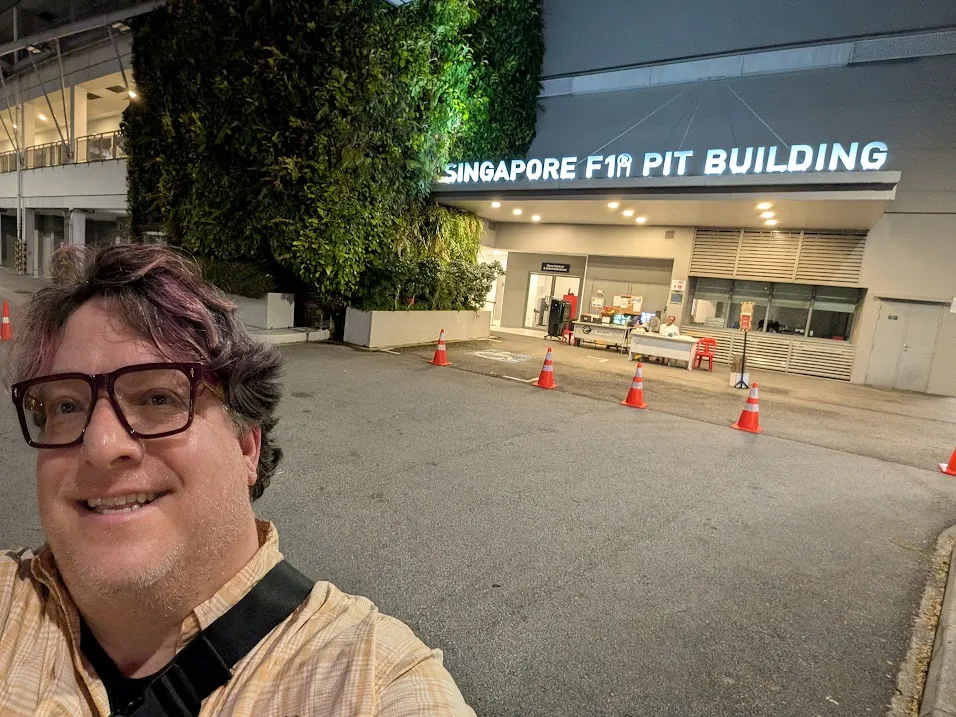
Singapore was lovely. I frequently get to a new place and immediately think about “how could I move here?” and Singapore was not different in this regard. The locals told us to come back later in the year; it would be cooler then. Reader, Singapore is basically right on the equator. It is in the mid 80s and up, plus super humid all year. So, there’s that, unrelenting heat. On the plus side, the downtown business zone has a ton of shopping arcades and underground tunnels, so as you traverse the city, you can kind of leapfrog air-conditioned locations. There are other reasons I might not want to live here, but it is complicated. More on that in a bit.
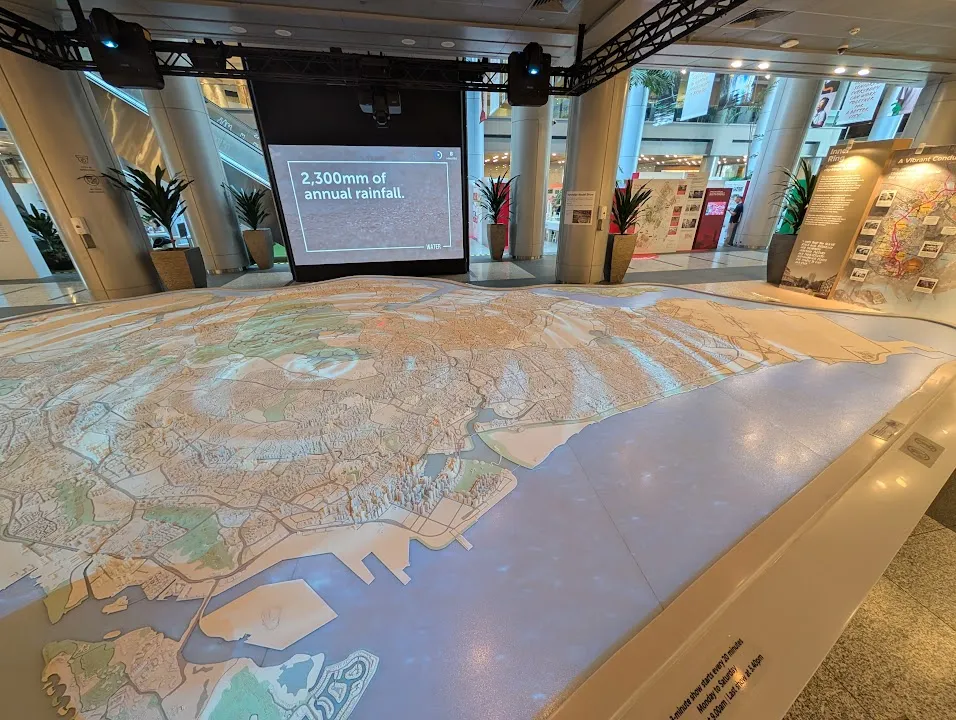
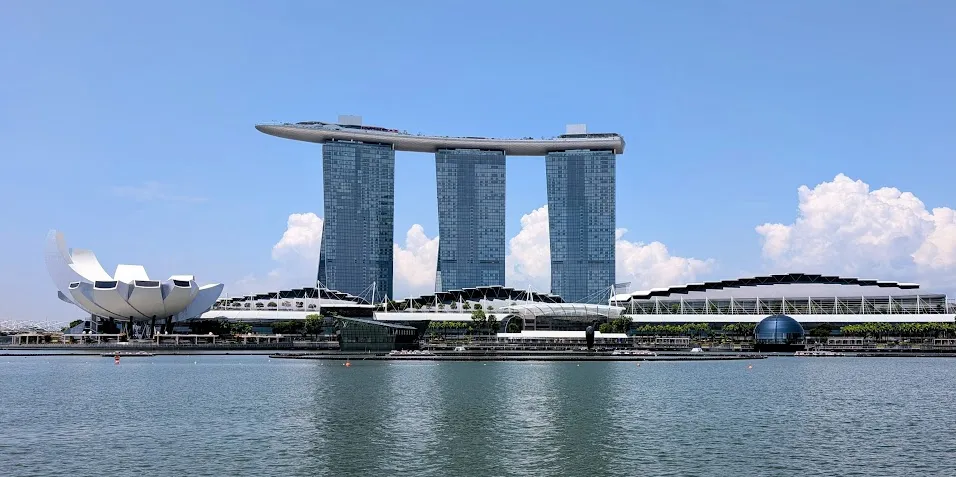
Singapore has a lot of central (some may say authoritarian) planning. In the City Gallery, our guide (Terry) told us about how the government makes these ten-year plans for expansion and growth. Earlier, he had mentioned that most of the financial offices in the high-rises he was pointing at would be moved to the Marina Bay area, and the high-rises would be converted to housing and mixed-use zoned stuff for more interesting commercial and touristic activity. The City Gallery showed previous project history and the plans for the future, and while I was there and recalling what Terry had said about moving a huge number of businesses about a mile southeast so a huge area could be redeveloped, I was struck by the enormity of that effort. Singapore is a city that is constantly rebuilding itself. It is so hungry to expand that both Malaysia and Indonesia banned the export of sand to Singapore (most of the Marina Bay district is built on what used to be Malaysia, packaged up and shipped in bulk over to Singapore). They still ship other kinds of rock and fill material, just not sand anymore. They get that from Cambodia, Burma, and Vietnam now.
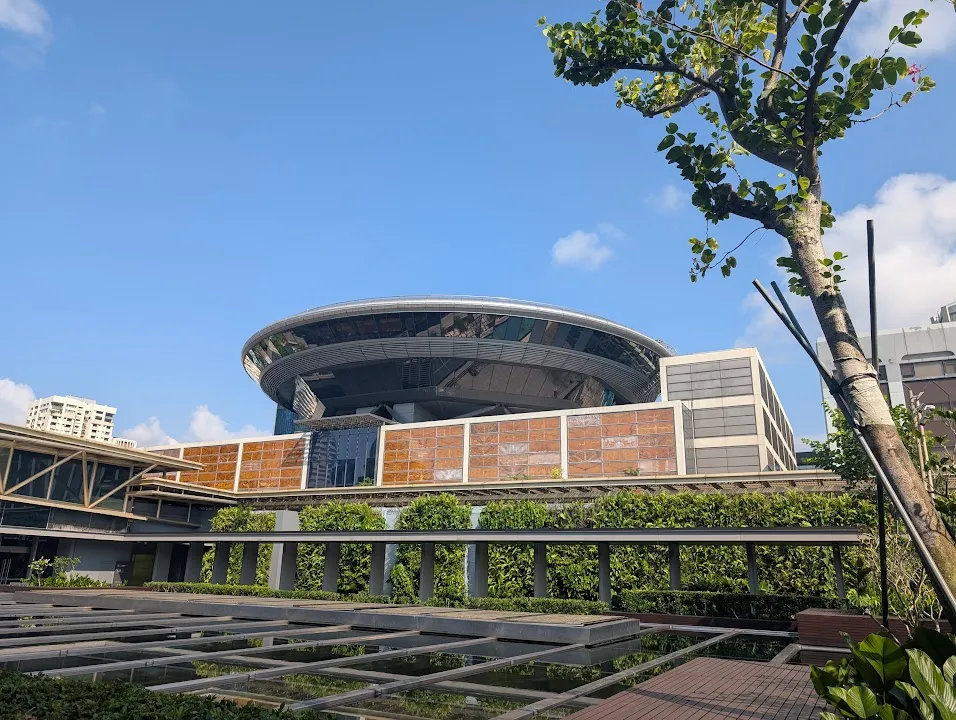
The first full day in Singapore we had a walking tour, starting with the Parliament building, we also saw the Supreme Court building, a bunch of other historical buildings, and several cultural zones. A little history, and as usual this is a combination of “stuff the guide told me” and “stuff I figured out with a cursory search of wikipedia and maybe reading some linked citations” so take this all with a grain of salt. Anyway, Singapore was founded by a bunch of Malayans who built a fishing village way down at the end of the Malay peninsula. Then in the 1800s a white guy showed up and actually founded it, I guess. Stamford Raffles decided it was a great location for a British colony, due to proximity to shipping lanes. He did the usual colonizer thing, and Singapore ends up being peopled with a mix of Malayans, Chinese, and Indian immigrants.
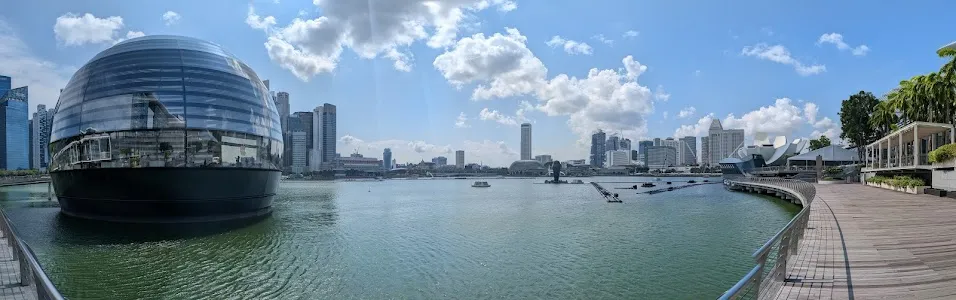
The usual history ensued; Singapore was occupied in WWII by the Japanese, and afterwards became a Crown Colony and then gained independence in the early 1960s. Then it was briefly a member of Malaysia; a lot of Singaporeans are ethnically Malayan. This only lasted two years, for a lot of reasons, most of them about ethnic supremacists. The Malaysian Federation was pretty fragile (Singapore was probably a marriage of convenience), it seems because there were a lot of Malayan people who were really intense about Malayan supremacy. Wikipedia has a whole article on Ketuanan Melayu about this, and it is fascinating. There’s a whole thing about how mainland Malay people are better than island Malays and so on.
There were race riots and bombings and other seriously terroristic acts in the 1960s in Singapore. The Indonesian dictator / president Sukarno (not Suharto, he came later) was interested in destabilizing the Malaysian Federation, so he probably funded some of that (plus he backed military incursions into Malaysia). After two years in the Federation, Singapore left. Or was kicked out. Our guide said that Malaysia treated Singapore like it was a septic toe that needed amputation, wikipedia makes it sound a little more mutual, but that’s probably one of those “wikipedia tries to have a neutral point of view” things.
So, since 1965, Singapore has been an independent city-state. There has only ever been one political party in Singapore. As far as I can tell, they do not rig the elections, they just keep getting re-elected. There is an opposition party (which is further to the left) that has some seats in Parliament, but the People’s Action Party have never not had a majority. Singapore has a President as a head of state as well as a Prime Minister, but the presidency is largely ceremonial. Also, as an entrypoint to the interesting nature of Singaporean government, there are some really strict requirements for the presidency. You need a certain amount of business or political experience, a lot of independent wealth, and there is a specific ethnic quota system in place so that the three main ethnicities have to more or less rotate. As a result, the current president (the first woman president of Singapore) ran unopposed.
Let’s talk about chewing gum. I suspect most people have heard that Singapore has banned it. In fact, you can buy chewing gum, but you need a doctor to give you a prescription, and the only prescription strength gum you can get has neither flavor nor sugar; it is just for chewing. This was something of a “ha ha so weird” thing I thought about when first entering the country, but then Terry told us a story about why. Apparently, chewing gum was behind a huge subway shutdown (the gum caused doors to malfunction; trains doors couldn’t close or open, so there was a big backup and eventually all the subways were involved in the stoppage and nobody could get in or out). Gum was already a littering nuisance, so the subway incident led led the ruling party to just ban the whole thing outright. I mean, it is certainly an effective approach to a specific problem.
But yeah, Singapore is pretty authoritarian. There are limitations to freedom of speech and religion. On our walking tour, Terry pointed out the “free speech zone.” This is where you go to protest, it’s a park area with a prominent police station right there. In fact, you need permission to protest, and you will not be given permission if the theme of your protest is:
Xenophobia (especially against immigrants)
One ethnic group is better than another
One religion is better than another or some religion is bad
Politics in general
Other than that, you are free to protest. Not sure what is left. Terry explained the last point as: “there are free elections every five years, if you think the government is doing a bad job, run and change something.” My natural skepticism discounts that, but otherwise … I don’t hate this? Yeah, curtailed freedom of speech, but if the curtailment is “you can’t be a White supremacist in public” you know, I guess I am okay with this.
Remember that Singapore in the 1960s (and presumably earlier) was a hotbed of racialized violence. This was a response to that; they looked at problems and pragmatically solved them. Gum causes issues? Ban it. Racism causes issues? Ban it. No system is perfect, and on balance I would rather live in a very free society where everyone chose to not be a racist, because giving a government that much power is just waiting for someone to come along and abuse it. Still and all, a very complicated but compelling issue. On the other hand Singapore is pretty bad on LGBTQ+ rights. Being a gay man was illegal (but not really enforced) until very recently (lesbians were okay, due to a quirk in a very penis-oriented bit of legal verbiage), and they still do not recognize gay marriage. So: not great in other ways, and of course the protest laws and difficulty of making reforms in a single party system means change is slow.
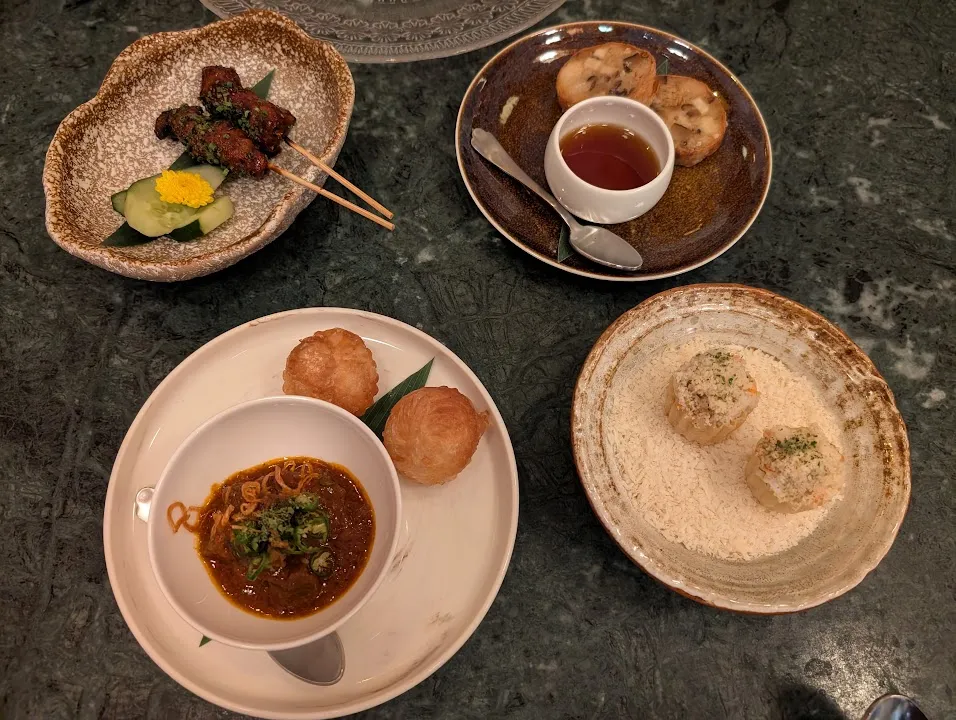
Dinner the first night was at Candlenut, which is a Straits Chinese (or Peranakan) restaurant. During the early British and Dutch occupation of the area, there was a lot of mixing of Chinese settlers with the local Malay, Thai, and Javanese people. The result was an ethnicity (and foodway) that mixes the whole region up. The food was amazing (they do have a Michelin star). I spent way too much time thinking about how the Peranakan people fit into the Singaporean rules for the presidency. My understanding is that this has not come up yet, but I bet it would count in the Chinese category. On the one hand, I really dislike categories (that’s probably the demand avoidance talking) but on the other hand I recognize that we need to understand and mitigate the damage that racialized categories that other people believe in have caused, so. Anyway, I loved the food.
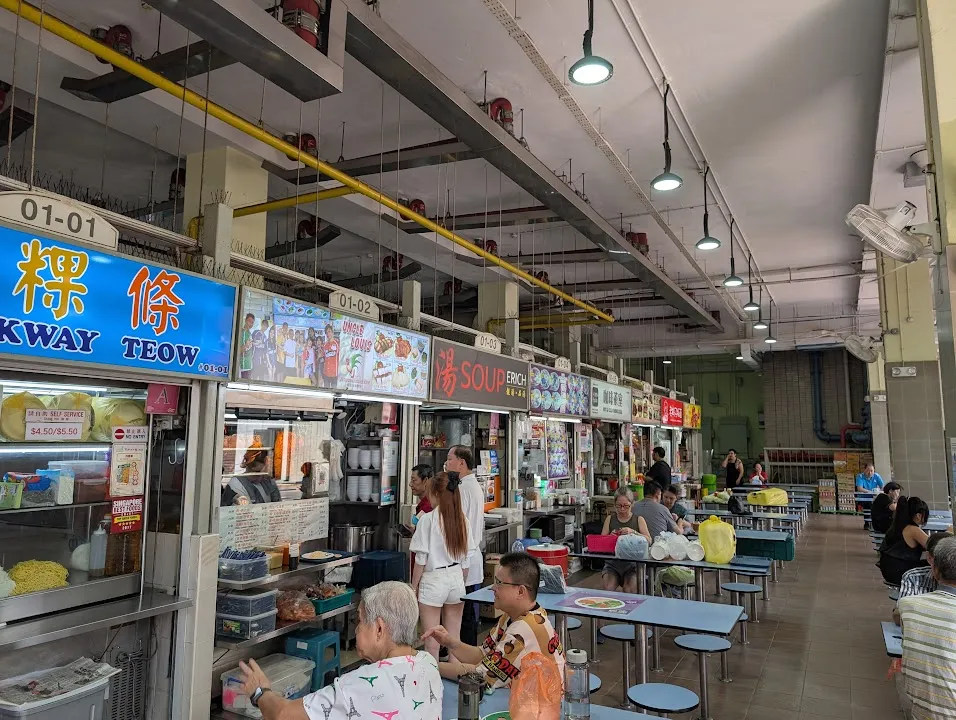
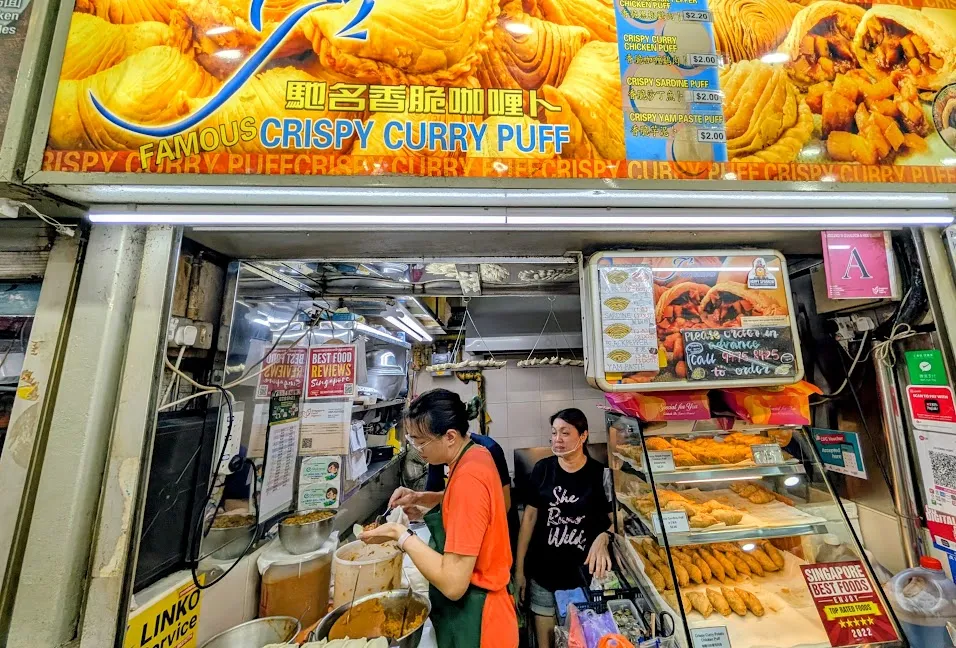
On the second day of our visit, we went on a food tour. This was one of my most-anticipated events of the trip, to be honest (right up there with Orangutans). Singapore has this amazing cultural history of hawker centers; there used to be a lot of street food vendors, but the government decided that was too untidy to have them on the street, so they built big buildings to house them. There are about 200 hawker centers in Singapore, each have about 100 to 150 stalls. You do the math and tell me if I should try to do a “we visit all the stalls” podcast.
Singapore does a lot of social engineering stuff. There are free apartments for pretty much any citizen who meets some income requirements (more wealthy citizens can just buy a nicer place). They prioritize people who are living close to or with their families, they prioritize people who are having or have had children. The free homes are actually leases with limited transferrability. You can sell after a little while (five years) and this is usually financially beneficial, but these properties cannot be inherited. Singapore has about 6 million people in it, and the official estimates for the unhoused population are around 1500 or so. By comparison, San Francisco has about 800k people, of whom 8000 are unhoused. Giving people a free home really does mitigate homelessness. The drug policies are draconian (including the death penalty, which is one thing we have in common with Singapore I guess) but most drug offenses come with mandatory rehab and the official position is one of rehabilitation rather than punishment. As with the homelessness estimates, I take “official” with a grain of salt, but honestly, a country that does not demonize its unhoused or drug users is a country that is facing in the right direction (modulo its other authoritarian flaws).
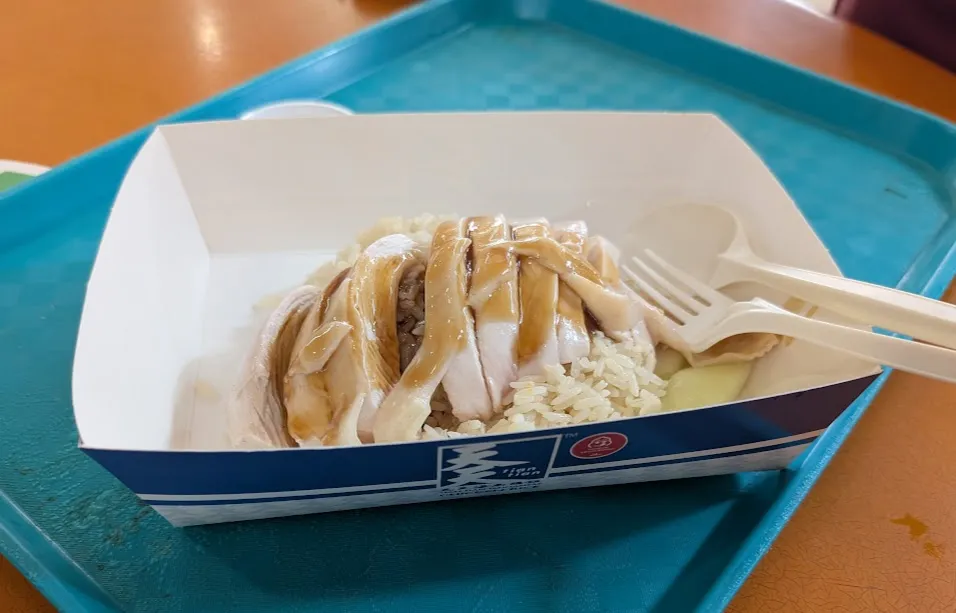
One thing that I am concerned about is sustainability. Not in a green / ocean levels rising kind of a way (although they are building defenses against the rising seas) but in a demographic sense. As a country, they are younger than my parents. These social engineering policies haven’t seen the full cycle of a generation or two of people. The median age for a hawker stand owner is 60. Stands close all the time as the owners retire, and their children have been raised with excellent public education to be doctors, engineers, lawyers. Who is going to make five dollar chicken rice plates all day in ten years? What will happen with all these free condos that the government builds when they run out of space? That last thing at least does not seem to be happening any time soon- most of the construction on Singapore is for private housing, the population is becoming wealthy enough to buy their own houses. But that speaks to rising cost of living and probably income inequality. I don’t know what the future holds, but it will be interesting to pay attention to.
And that was the end of our trip! I feel like a trip is never really over until I’ve written up the last blog post and finished my malaria prophylaxis treatment, so I’m still kind of on vacation for another few days. This time I was on the stuff that you have to keep taking for almost a month after you get out of the malarial zone (Borneo), but on the plus side it doesn’t give you awful dreams when you’re taking it like that other stuff.
Okay, bye for now! Maybe I’ll write more now that I’ve gotten the travelogue done. No promises; while I love writing, I need to be in the right headspace for it, and my day job usually does not leave me in that headspace.
Conversation happens inside — sign in to Overstory to read and write comments.