July 24th: Lombok to Jakarta
Some might call it Borneo, but Borneo is the island (the third biggest in the world) and it has three countries on it (kind of like the DelMarVa peninsula except for islands). Kalimantan is the Indonesian province on Borneo, home to (among other things) Tanjung Puting national park, which is home to (among other things) orangutans. So we’re going to Kalimantan, by way of Jakarta. There’s no good way to get from Lombok to Kalimantan; so we fly to Jakarta today, so that we can get up at butt o’clock in the morning tomorrow to get on a flight to Kalimantan. But first, we have to drive across Lombok, and we stop for some sights along the way.
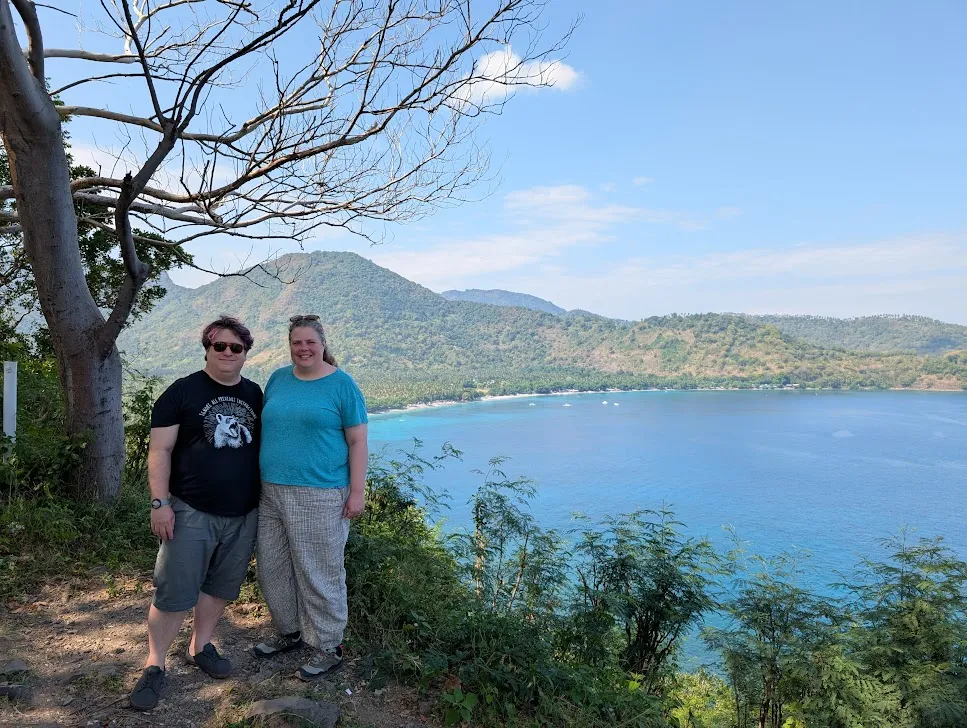
Lombok is a pretty big island, and like our time at Naya Gawana on Bali, we’re about as far from the airport as it is possible to be while remaining on the island. Our driver (Adi again) tells us that next time we should take a ferry from Bali; this is good advice as there’s a ferry route from pretty close to Naya Gawana resort on Bali to pretty close to the Hotel Tugu Lombok. I’m honestly not sure why we_ didn’t_ take a ferry. Flying is a lot of hassle, but maybe the inter-island ferries are harder for westerners to use unassisted.
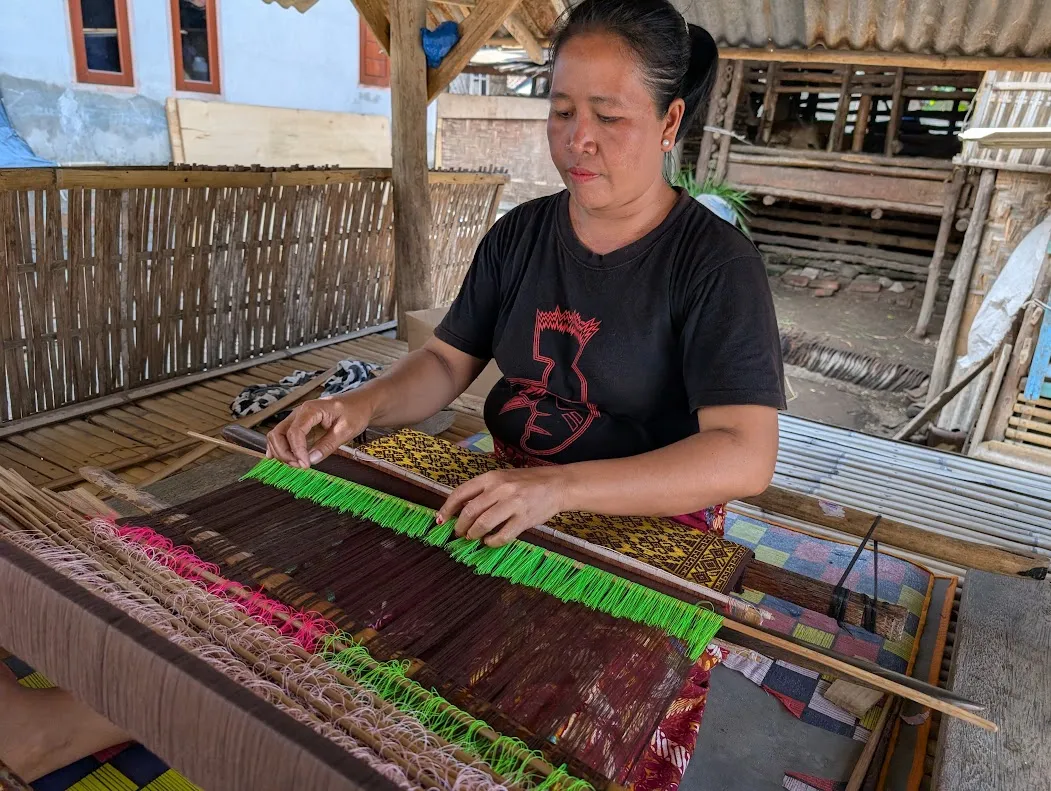
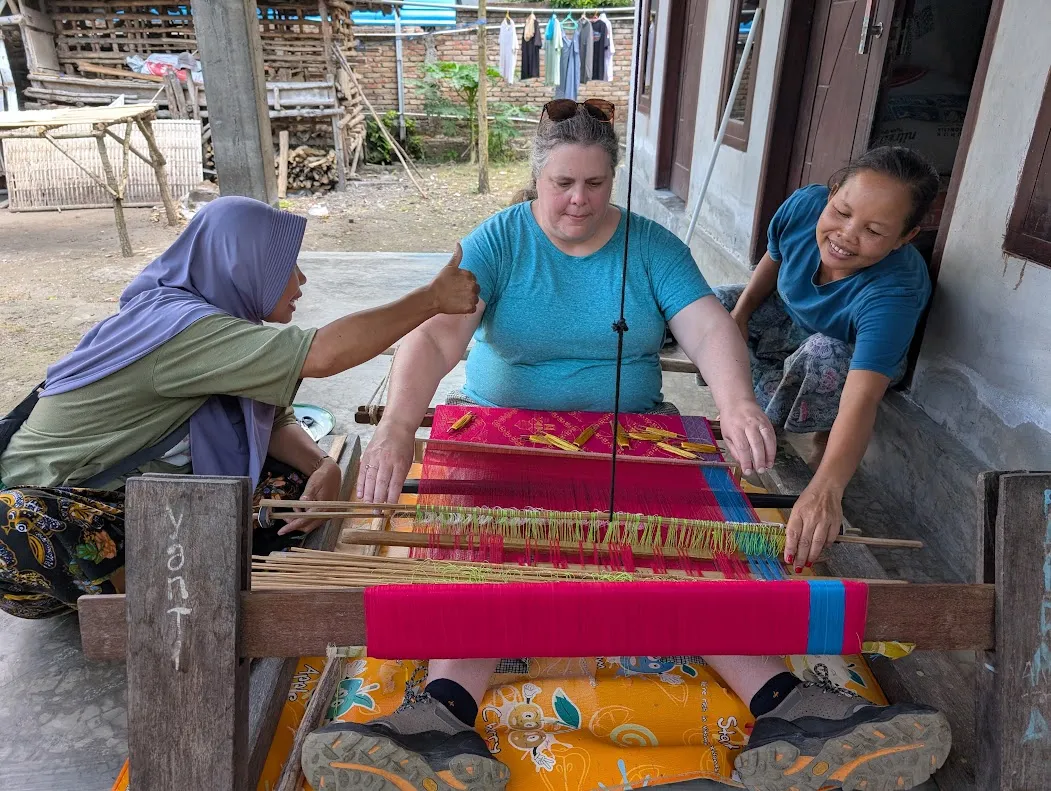
We stop in Sukarara village, which is known for its traditional weaving. Lombok is home (as are all the islands around here) to a mix of people and cultures that show waves and waves of migration. The Sasak people make up most of the population. Sasak trradition holds that women need to weave three major pieces before they can be married (for themselves, their husband to be, and for their mother in law to be). They also weave a lot, in general.
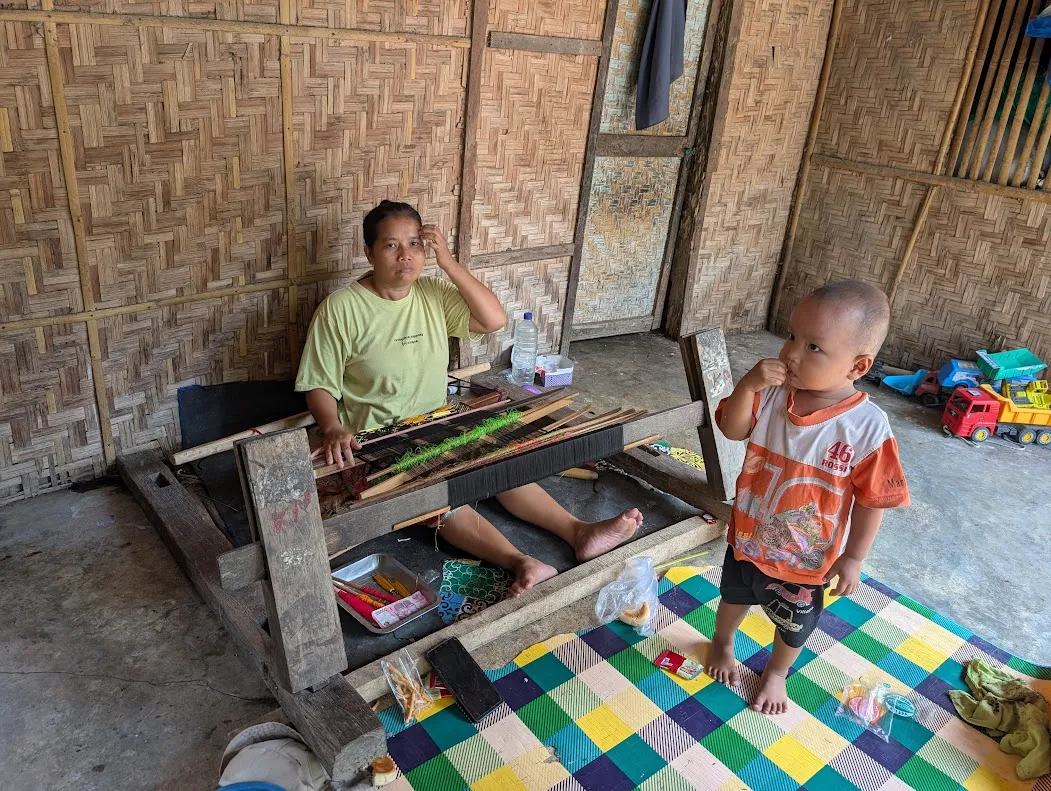
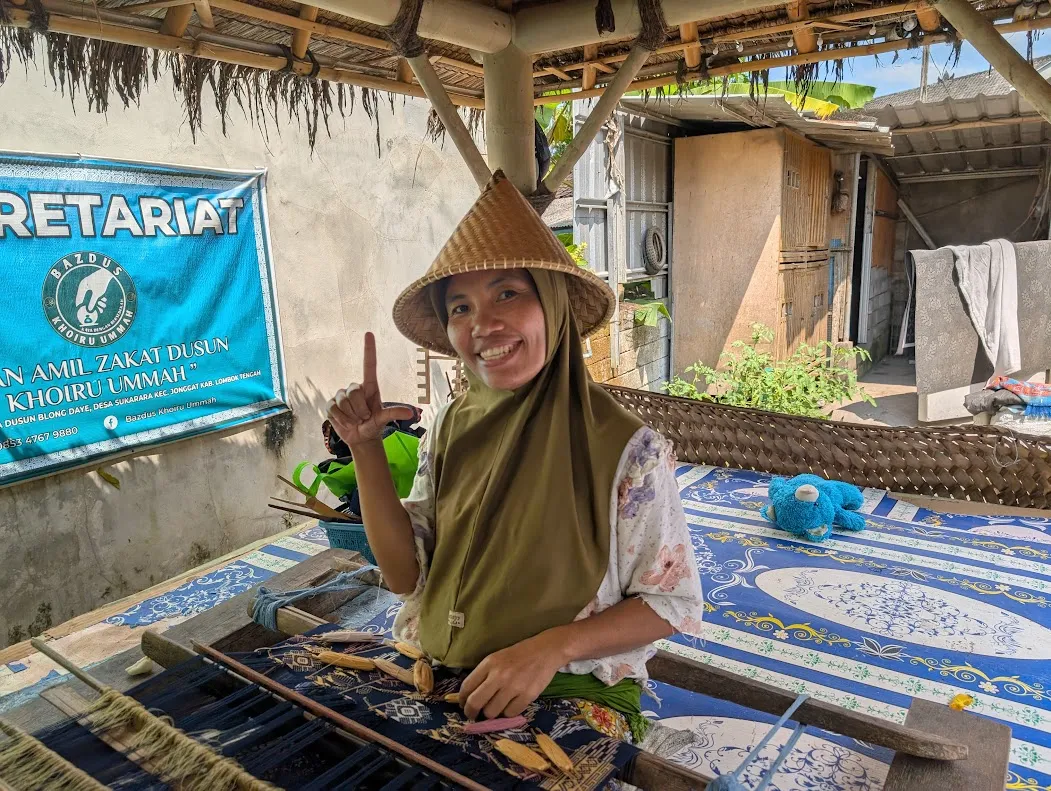
These looms are pretty fascinating. They’re tensioned like a backstrap loom (which we learned about in Peru; that trip predates this blog, sorry), but where the Quechua people in Peru used needles and pickup weaving on a plain weave setup, this configuration uses nylon string heddles to form the pattern. There were weavers that had upwards of sixteen heddles, it was pretty amazing. They would pull the heddle sticks forward and use flat sword-shaped pieces of wood thrown between the heddles to open a shed for weaving. The result is a very complicated pattern mostly woven with a thrown shuttle, although some of the patterns also used intarsia.
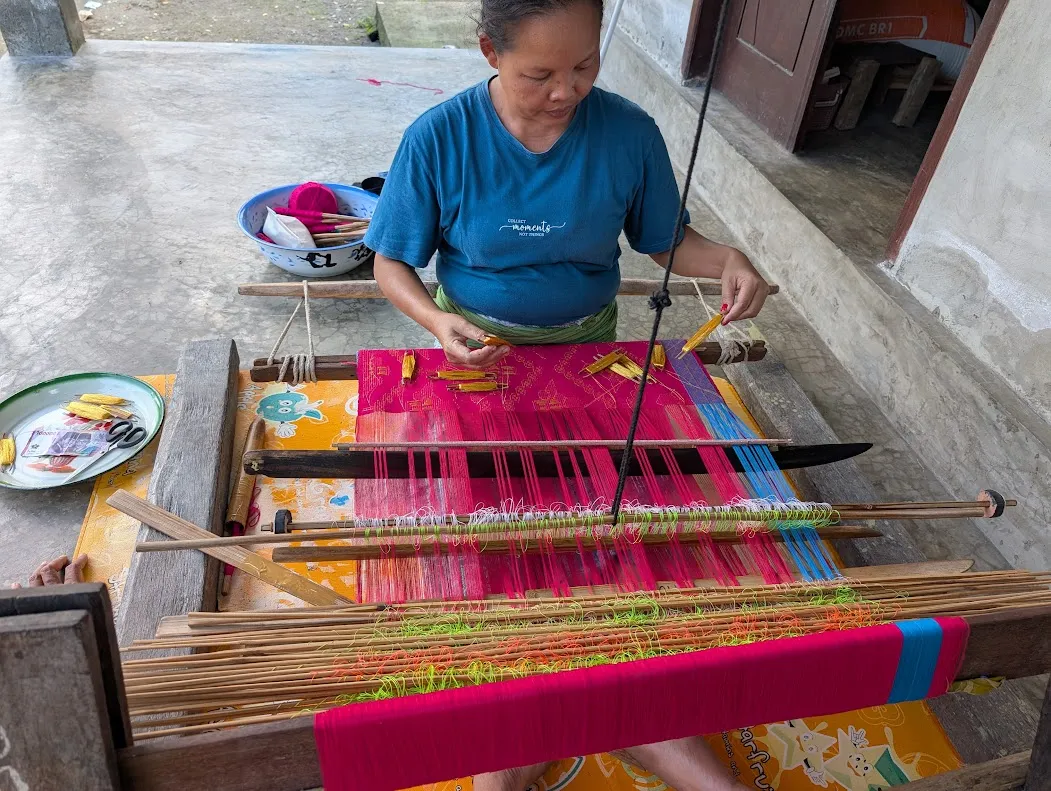
The women we visited were all part of a cooperative weaving group. They all worked together, each weaving (pretty much seven or eight hours a day they said, without really any weekends) and contributing their work to the shared shop. They also do the usual “women’s work” of making food and caring for kids. Later, we will buy woven pieces from the co-op shop at pretty high prices (for Indonesia at least), but I don’t feel bad about this- they share the proceeds, and I am happy that we’re able to give them hard currency for their work.
When we started our tour, our guide gave us these conical straw hats to wear. Good sports, we wore them. Every single person who we met said “nice hat!” Apparently these are farmer hats, what they wear when working in the fields.
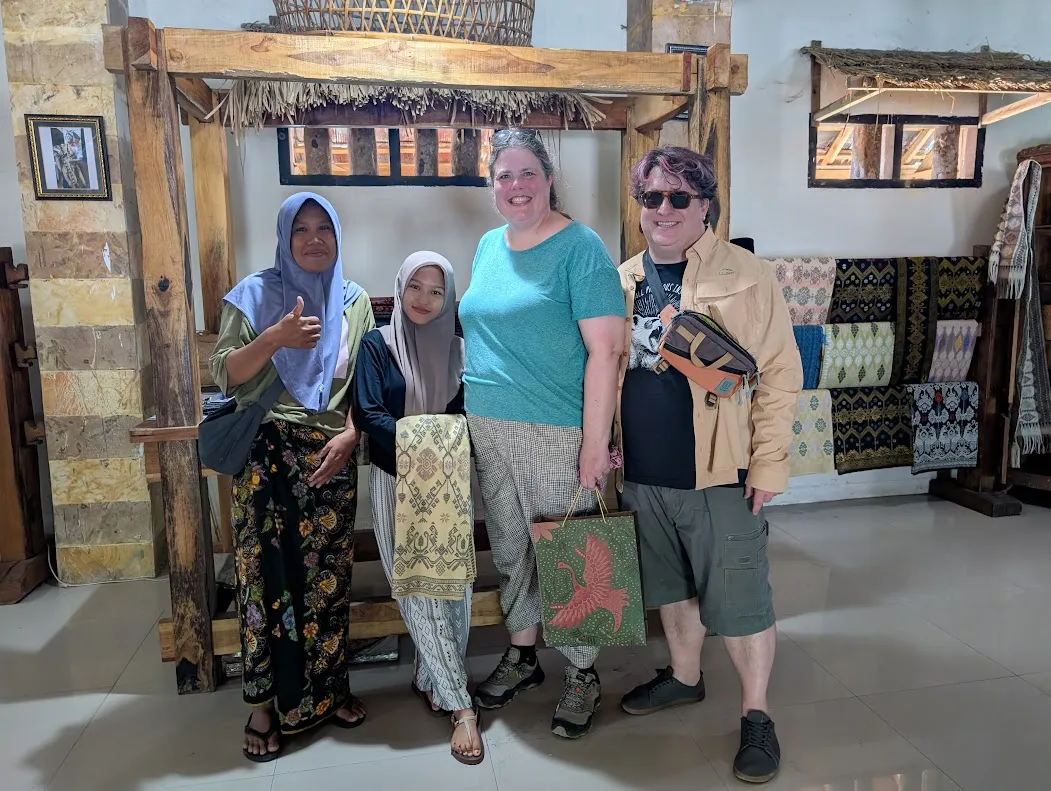
We ended up buying two woven pieces, which I really loved. I don’t think the co-op has any online presence; I feel like I want to help them build something that would allow them to sell their stuff online and ship it out. Maybe that’s impossible with local tax rules (and probably the cost of running a site and the rest, although they had a pretty modern POS machine for our credit cards). All I know is that the Anou Collective from last year’s trip to Morocco had a pretty great website. With rugs though, shipping is more vital- it’s a lot harder to get those in our luggage.
Anyway, after all of that, we got to the airport, waited around, and flew to Jakarta. Jakarta is a big city that we saw very little of; we just went to the hotel and crashed out. Dinner was room service (pretty decent fish, lousy “and chips”, plus a great mango chicken). We closed the curtains and tried to get to bed early enough that the butt o’clock wake-up would at least be after seven hours of sleep or so.
Conversation happens inside — sign in to Overstory to read and write comments.