July 20th: To Lombok!
This morning, our visit to Bali came to a close, but we are not ending our Indonesian Escapade. No, today we’re flying to Lombok. Well, first we’re driving like four hours from Banjuwedang back to Denpasar airport (across more or less the entire Island). Big shout out to Balik and Mayat, who got up at like 1am to drive up to Banjuewedang, pick us up, and then drive us to the airport with enough time to check in early for our flight. Balik is a conservative estimator when it comes to island traffic, so we got to the airport with plenty of time to spare, but sometimes Bali can just have pretty awful traffic and you need to prepare for the worst.
The thing about traffic in Bali is: almost every road is barely two lanes, and there’s pretty often stuff blocking part of a lane (a parked car, a pile of rocks, that sort of thing), which will cause people to need to take turns going through the constriction. There’s also slow trucks (like really slow) that need to be passed pretty regularly, and about twenty percent of the scooters are 50cc jobs that don’t get much above 20 MPH, so they cause issues too. The rest of the scooters are a really interesting emergent phenomenon.
If you’re going a little slow, most motorbikes will pass you. They then school up behind some big slow-moving thing (like a truck) before the road straightens enough to see ahead, and there’s also not much oncoming cars, and then they’ll all pass the truck. But the fact that the scooters school like that is important- they create breaks in the line of cars. A car that needs to turn right onto some other road (Indonesia is left-lane driving) will not be yielded to by cars (this is a big difference from what I observed in Bengaluru). Instead, what happens, is the driver waits until there’s a school of motorbikes and then just turns into them. The bikes, being small and nimble, will spread out to make room for the car, and slow down a little bit causing the cars behind them to slow down in turn. This allows us in the right-turning car to turn right, which fully stops the cars in the oncoming lane. Now all the cars behind us will also turn right, and that will continue until we reach a scooterbolus, and the same thing will happen, the oncoming car will just drive into the bolus, confident that the two wheelers will evade. It’s all at relatively low speed, and I didn’t see any accidents (although apparently tourists renting motorbikes are a positive menace to themselves and others, because they have no idea how to do this).
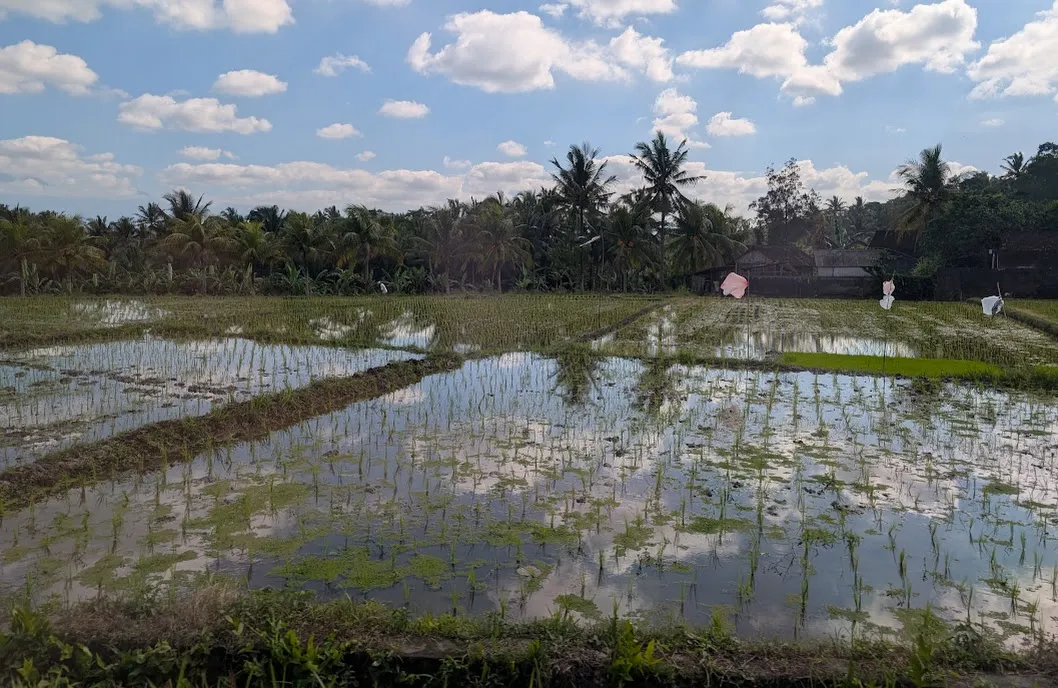
One thing I think about a lot in general is how your beliefs about the world shape how you see the world. This is a side effect of my academic background, but radical constructivism never really sleeps or takes time off, even if I haven’t been in the academy for decades, I am still an academic. Anyway, I want you to look at the picture below and think about what you see.
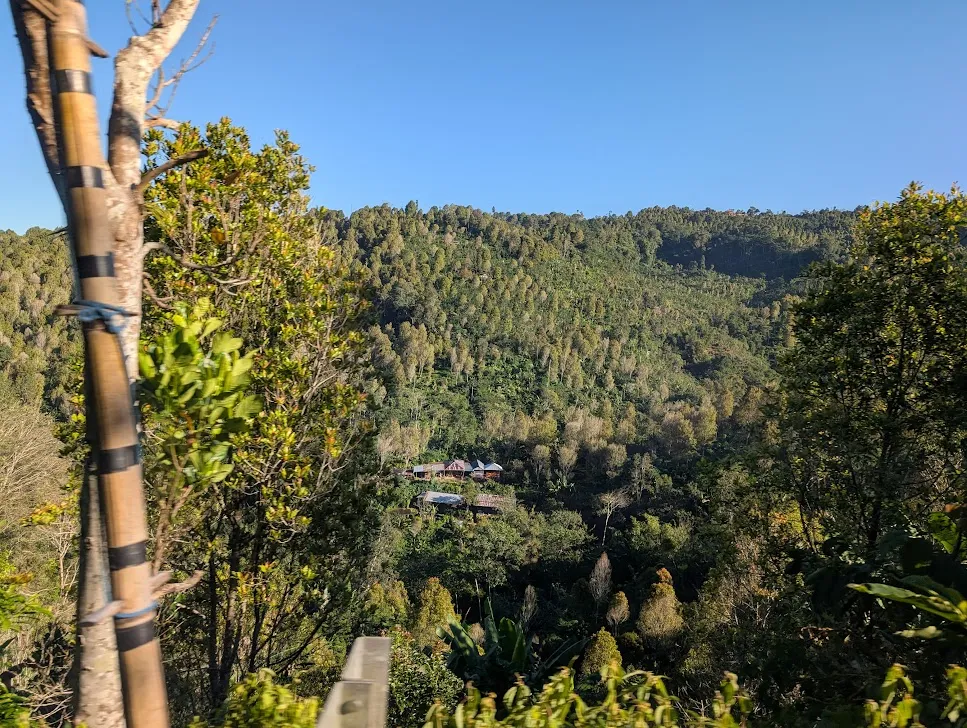
The thing about Bali, is that most of it is under cultivation. When I first looked at the hillside and asked my guide (Bawa, this was back when we visited the waterfalls, but I am writing about it now, on Lombok, in a post about stuff that happened a few days ago, time is weird) what kind of trees I was looking at, I expected some answer about jungle trees. But he said, no it was mostly clove trees. Have a look at this other photo (not the best, it was out the window of a moving car):
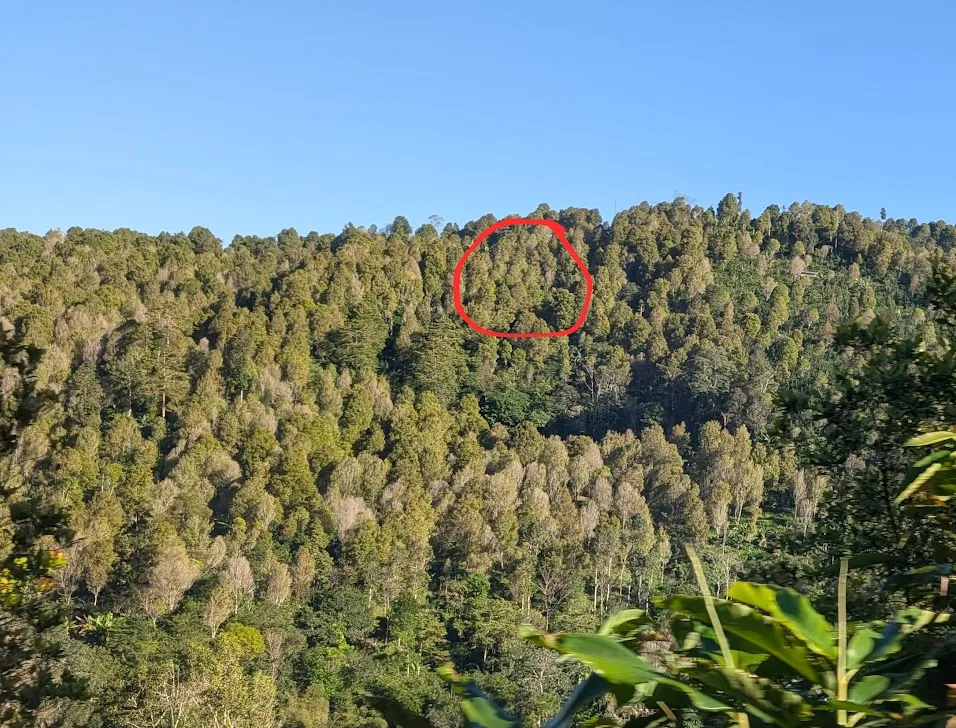
Now scroll back to the earlier photo, look at how the clove trees in that photo are kind of in a grid. At low elevations, almost all of the not-house land is rice paddy. But at higher elevations, where it looks like it’s just jungle, it is actually cloves (the current best cash crop), papaya, vanilla, and cinnamon. They grow all kinds of stuff here: this jungle is actually a working farm.
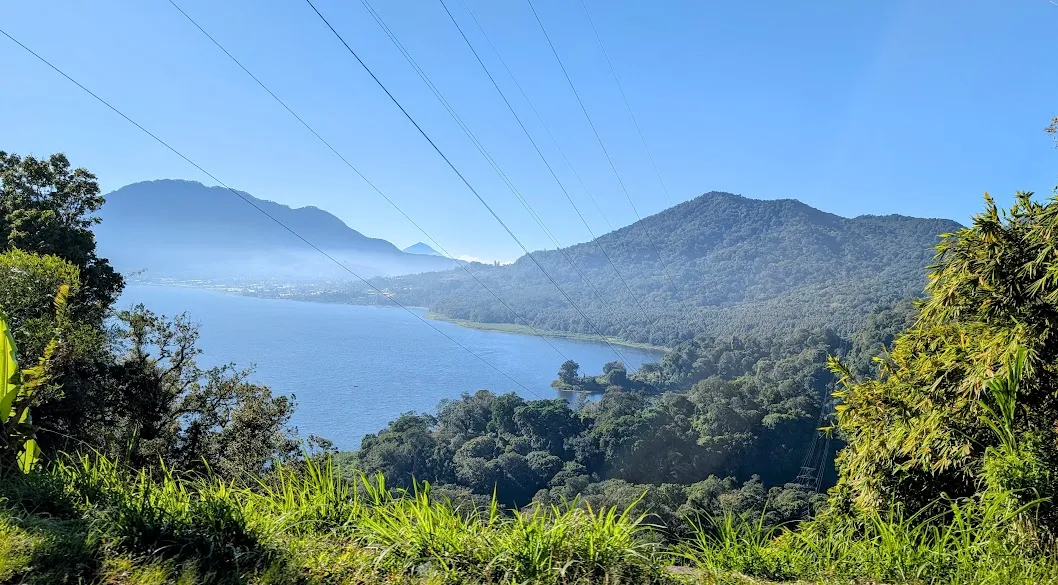
When Europeans colonized North America, they thought the Native Americans did not practice agriculture. They did that for two interlocking reasons- one is, they thought that they were civilized and the Natives weren’t, so therefore they couldn’t have agriculture, because we have agriculture and we’re better than them. Also, they couldn’t see Native American agriculture, because it just looked different. A three sisters garden is very productive, but also doesn’t look like rows upon rows of tilled and precisely arranged vegetables. The land shapes the agriculture (or should); much like the beliefs of the viewer shape what they see. So once I learned a new thing, I couldn’t help but see it all over. This is honestly my favorite thing about learning stuff, whether through travel or just reading or taking a class: it helps me see and interpret the world in a new way.
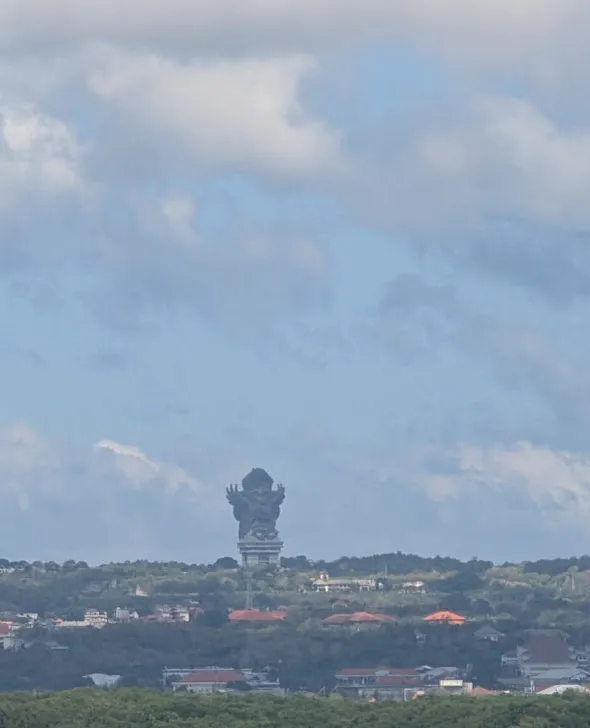
It turns out we were not just early for our flight, our flight was never actually on time. It had a median delay of 30 minutes over the past two weeks, and we hit that median precisely. It was also a pretty small turboprop plane, and the flight was like 35 minutes in the air, so no big deal. No luggage problems this time. We got met at the airport by a driver from the hotel.
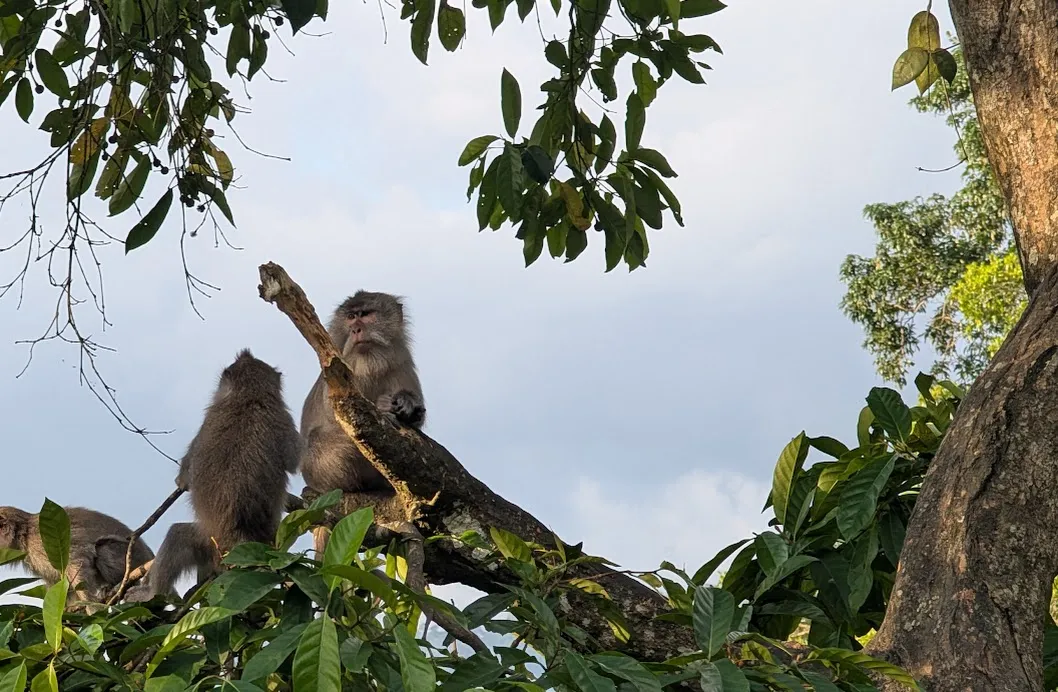
We stopped partway along the drive up; the driver wanted to show us some monkeys. These macaques live in both Bali and Lombok at the higher elevations (mostly; I think they actually just live where there’s trees, but the lower elevations don’t have many trees, they have rice paddies) and are always hanging out at little highway pulloffs. There was some encouragement where we were peer pressured to feed the little guys, but the last thing I want to do is get a rabies prophylaxis series, so I politely demurred. In Ubud, the monkey garden was directly adjacent to a tetanus / rabies clinic. There’s other monkey types around (langurs, which are objectively cuter than macaques), but they are more shy and we didn’t get to see any.
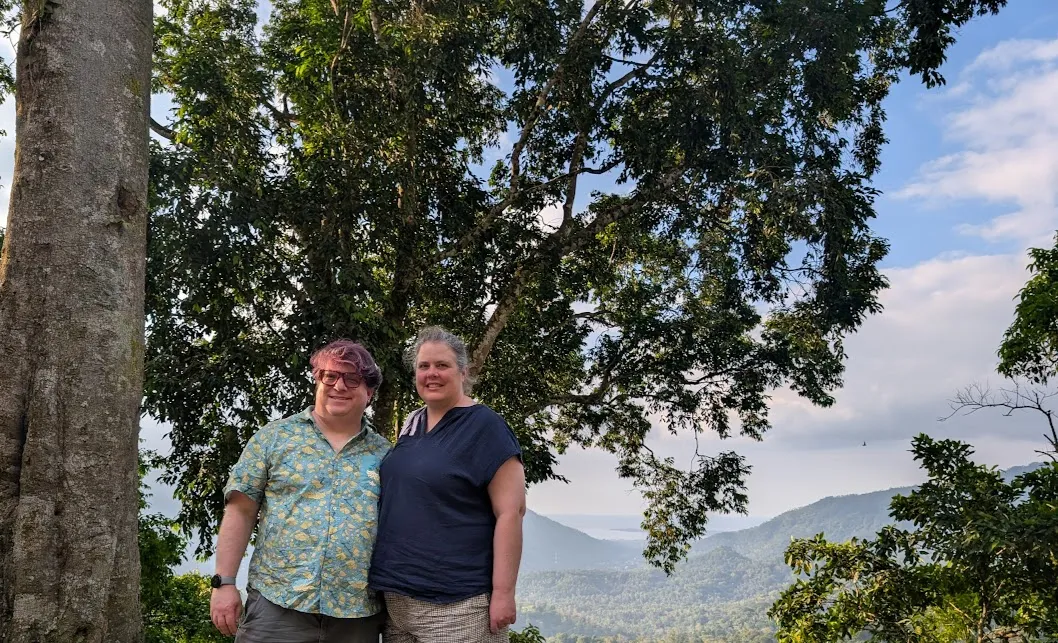
The driver (Adi) was really into the food at the resort. We got a play-by-play of all the delicious stuff we were about to experience. “Oh yeaaah that’s great”, he’d say. Writing this now, three days after meeting Adi: he was correct. This resort has some pretty fantastic food.
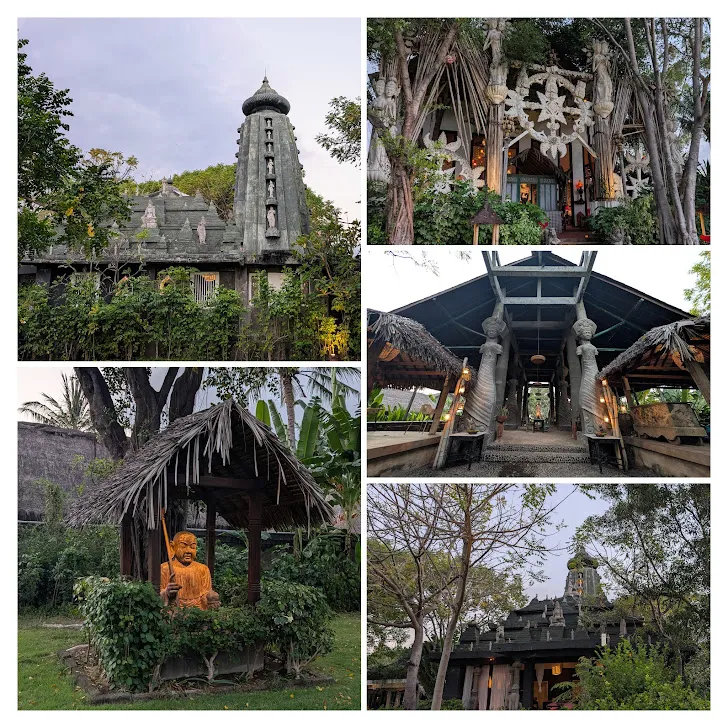
Also, it is a pretty dingdang nice resort. It is done up in a early-Hindu / Buddhist style. The island of Lombok is mostly Muslim. There’s a couple of mosques close enough that we hear the call to prayer five times a day. It is more lyrical and musical than the Adhan in Morocco were. Constantly reminds me of this one part in Discworld where Pratchett describes how noon is marked in Ankh-Morkpork by a cacophony of bells that only approximately agree with what time it is. There’s a bunch of different mosques, and I don’t know if they decide to offset so they don’t step on each other, or they legitimately disagree about what time it is. But the evening call in particular takes a while to die down.
Okay, now we’re in Lombok, and I posted two posts on the same day, so I could catch up a little bit. The tail end of our trip will probably be less online (on a boat in Borneo), so I want to get as caught up as possible before I fall behind again.
Conversation happens inside — sign in to Overstory to read and write comments.