July 12th: Ubud, Bali
Everywhere you go in Ubud, there are little banana leaf packages on the ground with rice and some other food. These are offerings; most Balinese people are Hindu, and they will set out a little bit of their breakfast or other meal as an offering. It is one of the things I notice when I am traveling: public religion in other countries is often a lot more noticeable than it is in the United States.
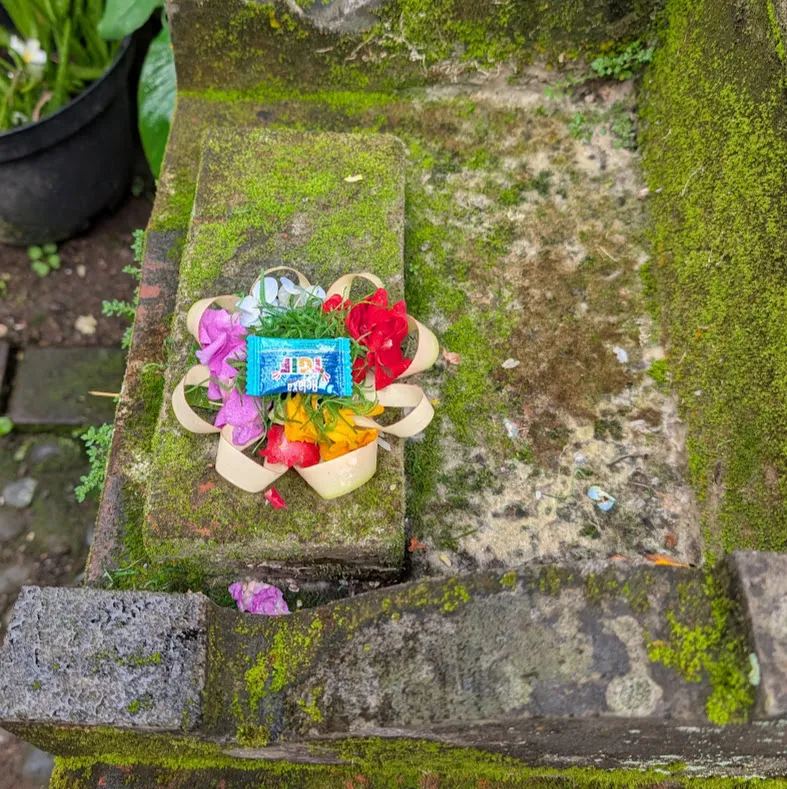
Or maybe, I am just so inured to and immersed in a vaguely Christian culture that I don’t notice stuff like this back home. There are church bells sometime, so why should the Muslim call to prayer (last year in Morocco) stand out so much? Are the Balinese Hindus a lot more publicly religious, or do I just notice it more? Hard to say.
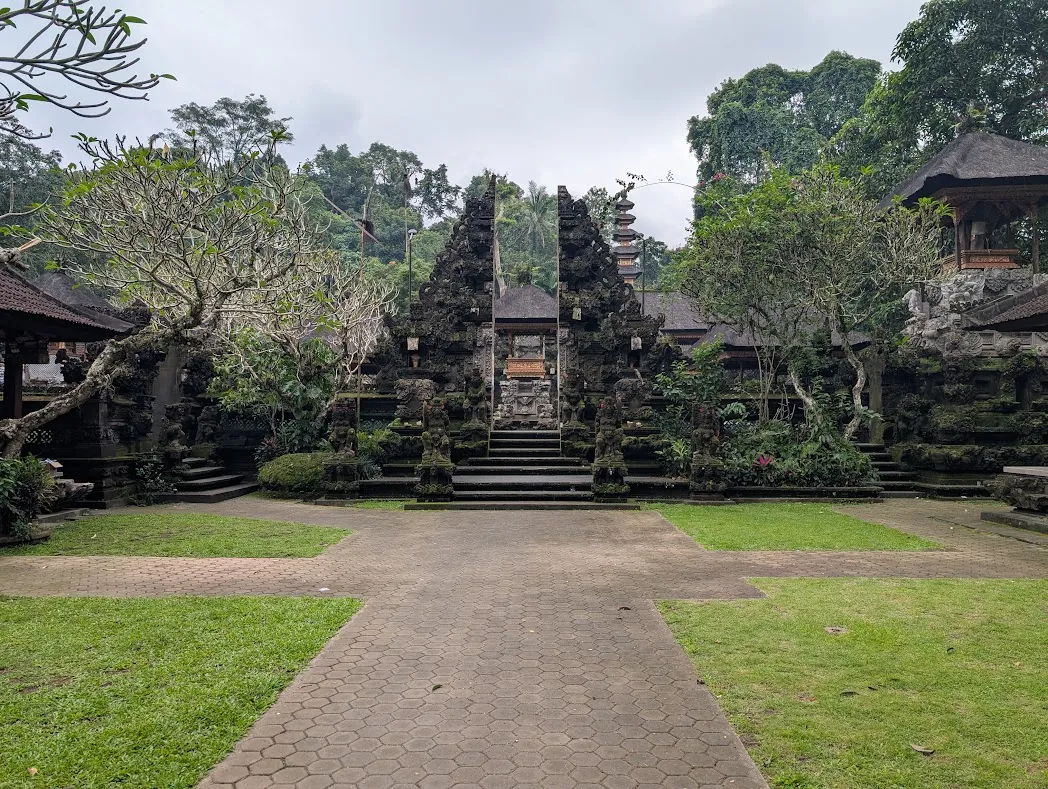
With the exception of the Ubud Palace temple that was one of our first tourist stops, the temples we saw were mostly working temples. Many had worshippers present, carrying out their sacred practices.
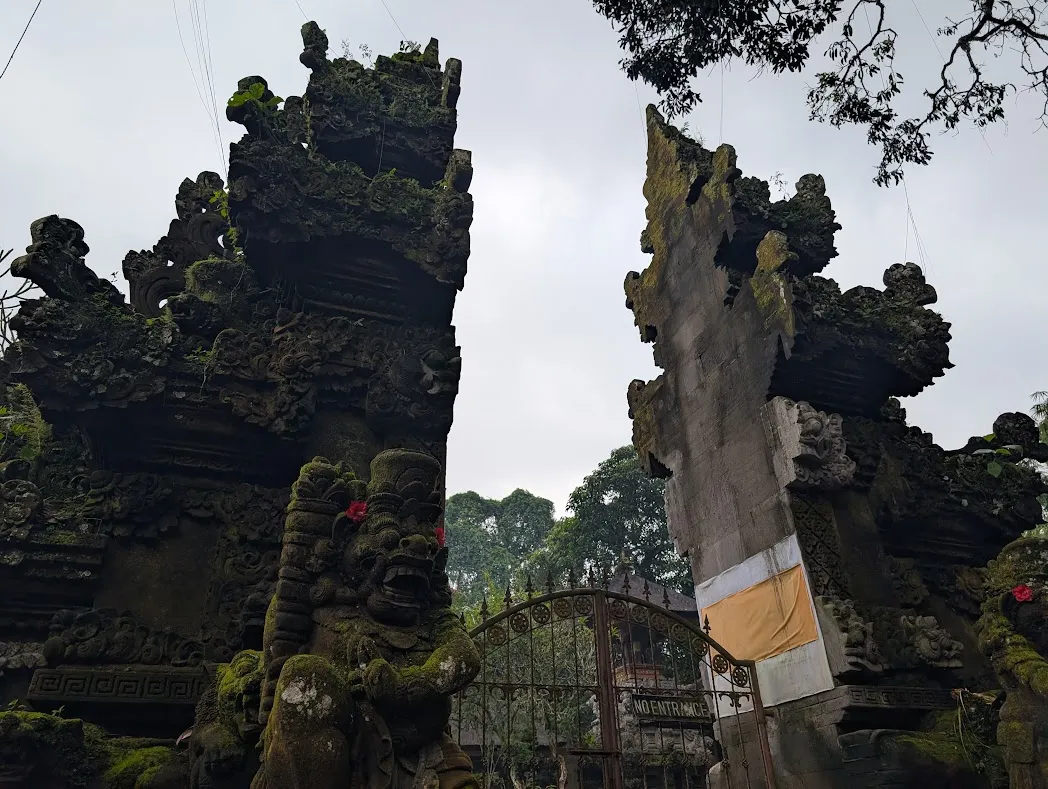
In Rome, and all the European cities we visit, we usually go to cathedrals. Despite not being religious, I can still find cathedrals beautiful, and there are often services in progress or prayers being offered. So I guess it is the same. This is a beautiful building, in a beautiful place, chosen to be a place of worship.
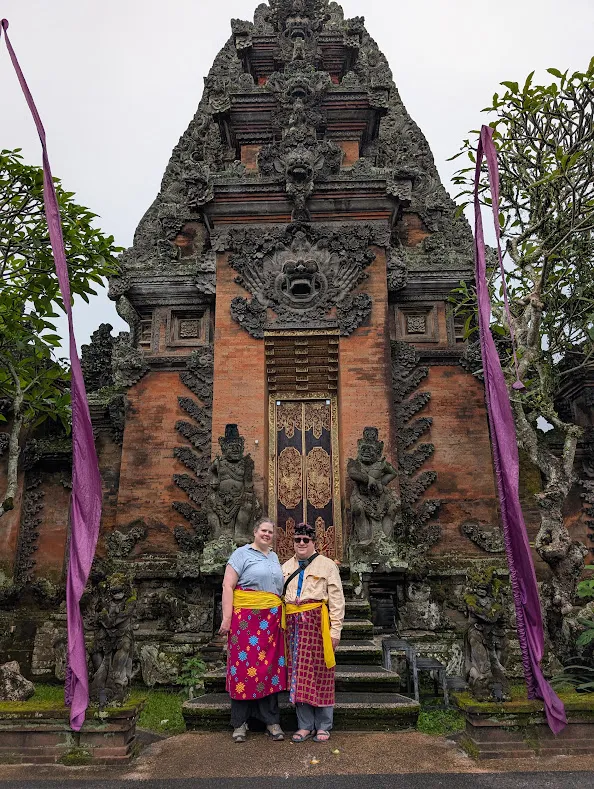
Ubud has two palaces. It used to have two kings, back in the early days; there were multiple villages near the river, and they kept fighting. So the king in Java sent two sons to rule in two palaces. We visited one.
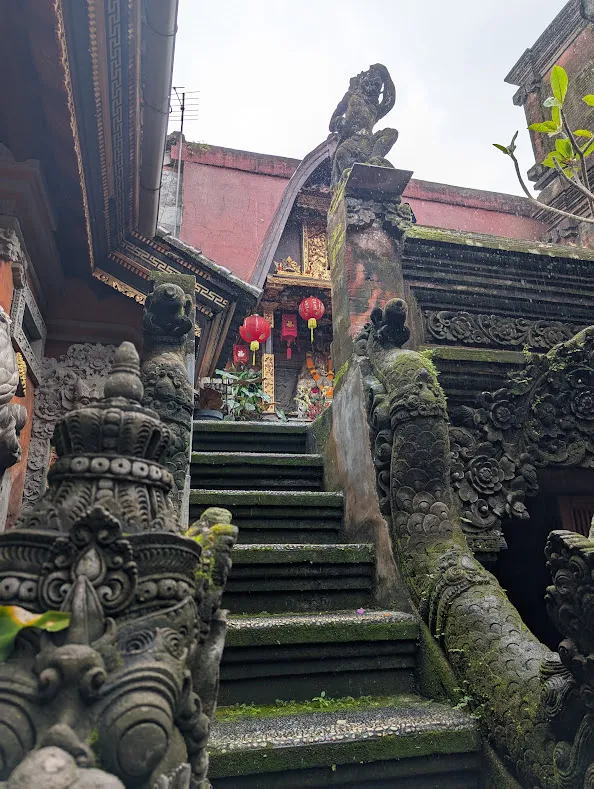
After the palace, we went to visit a Brahmana; who are the highest caste in Balinese Hinduism. He gave us an astrological reading based on our birthdates and answered questions we had about our future. My question was answered with a complicated “you would be good at anything, so do either”, which is as close to “unask the question” as I guess I probably deserved. I still wrestle with this- is it more useful to be someone who builds things, or a leader who helps other people build things? Someday, someone will let me know. Chrissy was told that her birthday was the day before Saraswati day, so her chosen profession of teacher was a correct one, and she should probably never retire. Saraswati is the Balinese Hindu goddess of knowledge and wisdom. Of course, due to the international date line, when Chrissy was being born, I think it was already Saraswati day in Bali, so we’re doubly correct here.
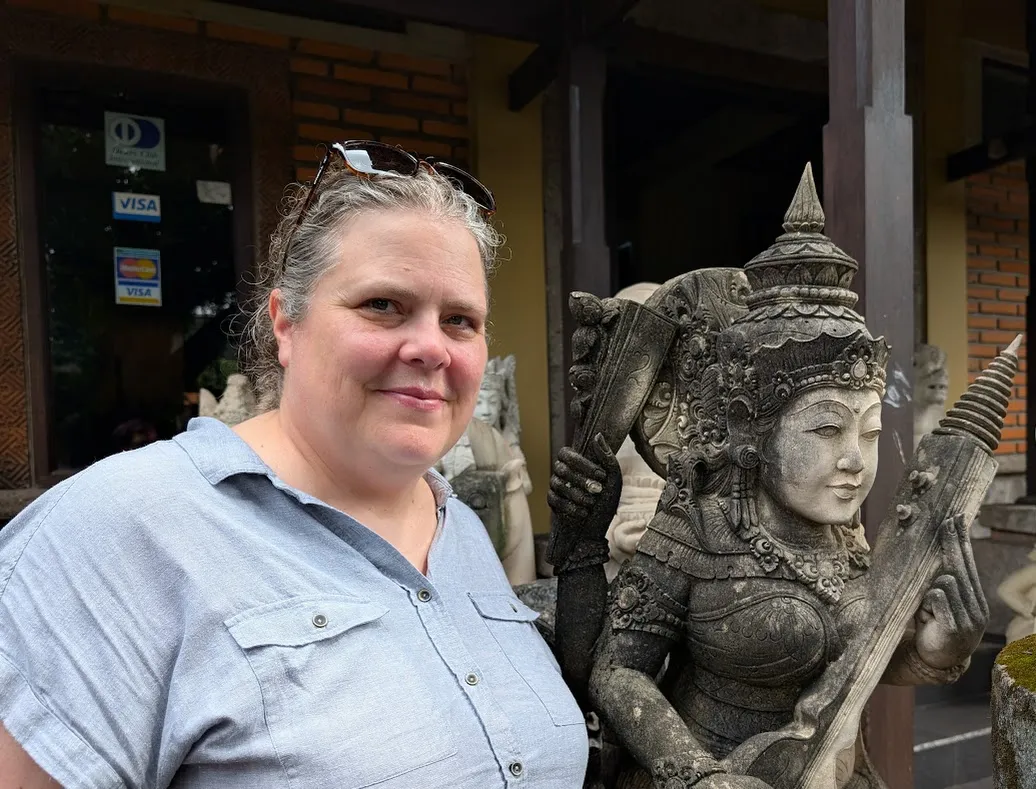
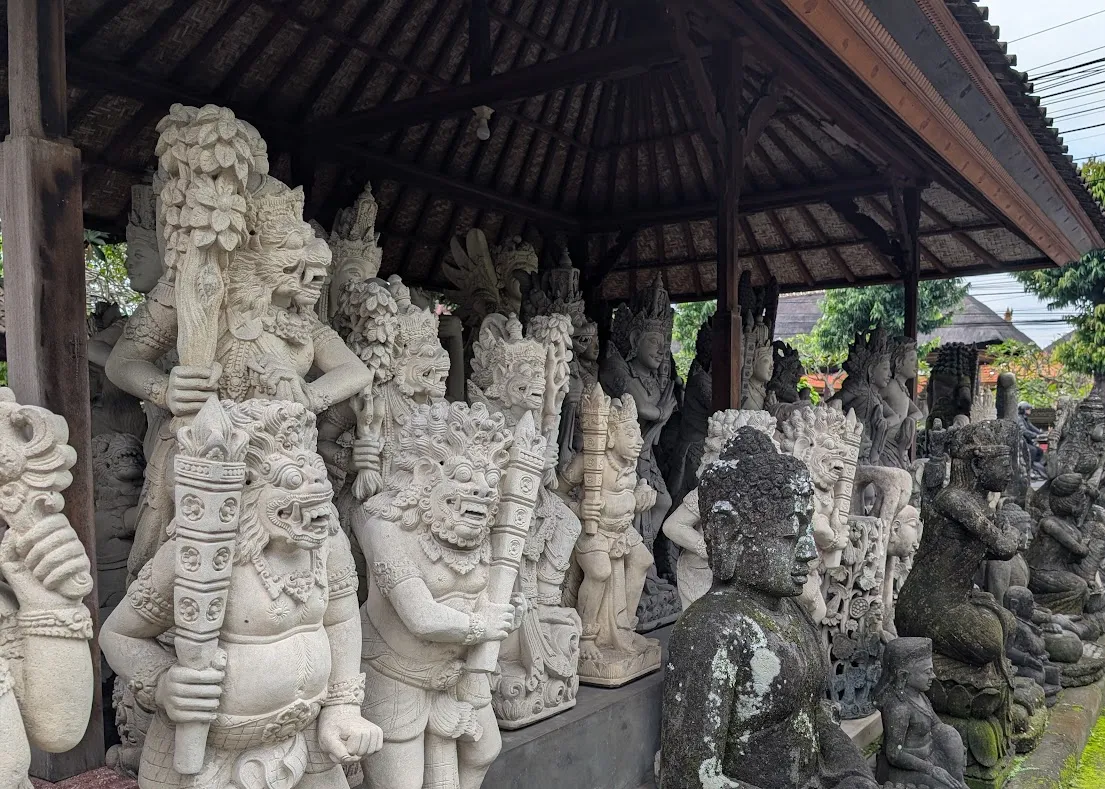
Afterwards, we visited several artisans. Balinese artisans (around Ubud at least) are organized by village. There is a village of stonecarvers, a village of woodcarvers, of batik fabric workers, and so on. A complicated statue like Saraswati above represents about three months of labor, so the collection of dozens of statues below could well be a decade of skilled labor. Most of the artisans have other jobs - they are farmers in the morning, work stone (or wood, or whatever) in the afternoons.
Our tour guide (Balik) is also a wood carver. He was also a religious leader in his home village as well- the person you might call to organize a funeral or wedding, but he was too busy with being a tour guide; he had to pass those duties on to other people. He said, “they asked me to do it again, and I said, ‘give someone else a chance to do it.’” He would get called during tours. So he does tours and also carves wood. I’ll have more to say about Balik in future posts; he’s a really interesting person and his quiet but strong religious beliefs are probably contributing to my noticing of all these religious things in Bali.
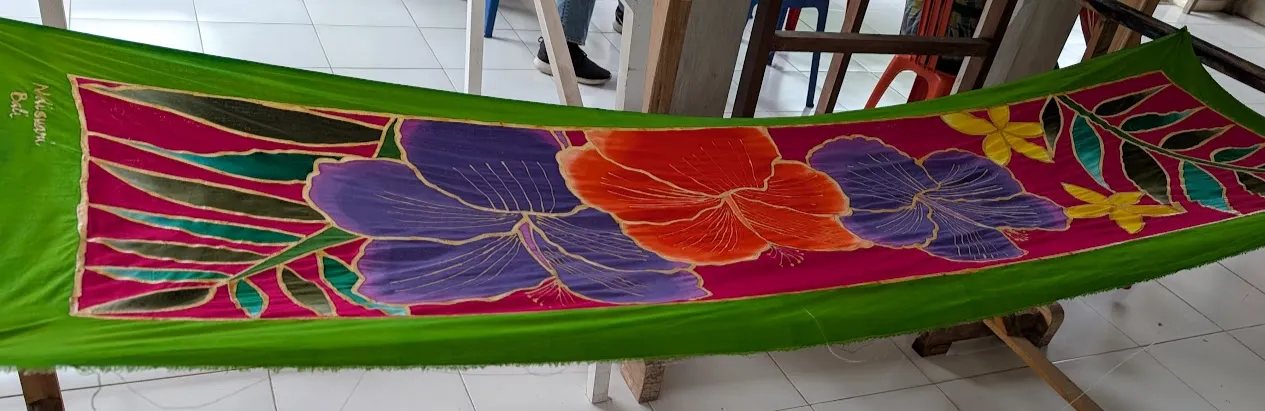
The Batik fabric dyers use natural dyes on silk and cotton fabric that they weave themselves. They use wax resist and gradient paints to apply the colors, and often do multiple layers of wax (apply one color, wax over part, and then apply another color but not on the waxed portion). They will also dye warp threads and weave colorful patterns on a plain weave loom (not shown, sorry, I got distracted and also I know what looms look like).
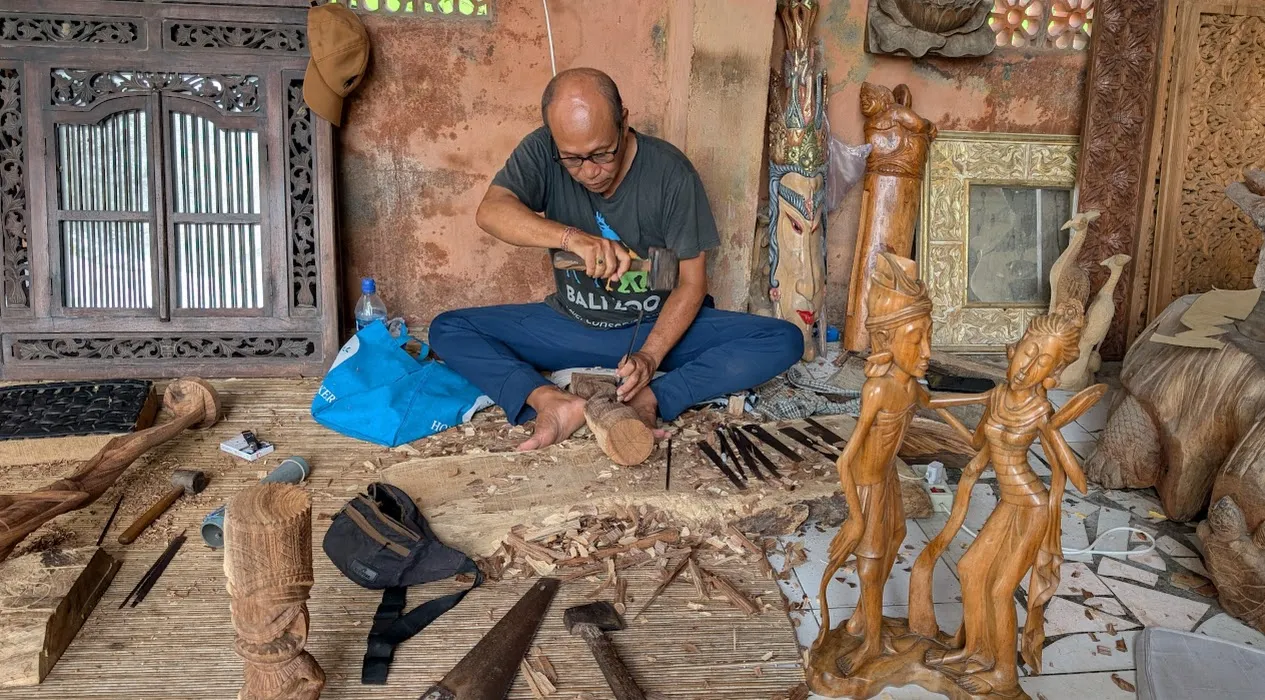
Some of the original people to live on the island (well before the Hindus arrived) used the erect penis as a fertility symbol. There are a lot of penises on Bali. Just to the left of this woodcarver, there was one that was about four feet high. The batik place had, in the gift shop area next to the hand-dyed shirts (I got two), some wooden penis bottle openers. The opener extended from the bottom, and I am honestly not sure which side of a penis should have a bottle opener attached for proper use.
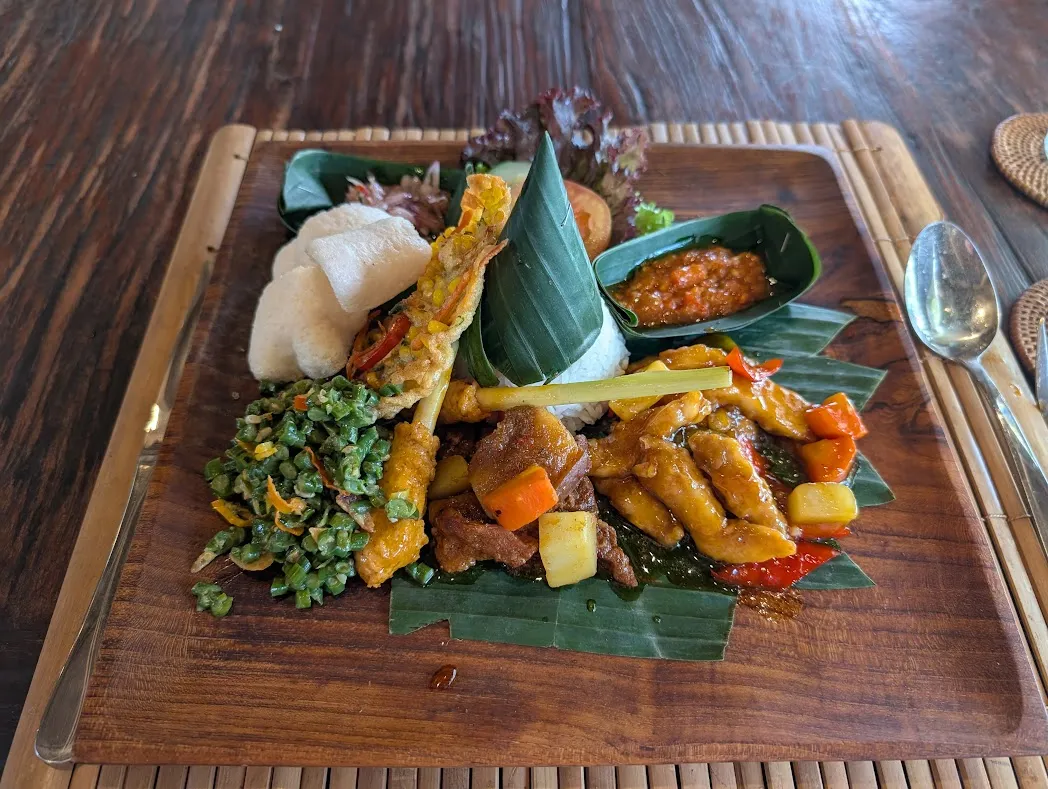
After that, we went to lunch; which consisted of (widdershins from bottom left) long beans, chicken satay (on lemongrass stalks), pork belly, salmon, sambal, salad, shrimp chips, and corn fritters. I ate everything. During lunch I got a message from the hotel that our wayward bags had arrived.
Then, a trip home to refresh, where I realized that the reason I hadn’t been worrying about work this whole time was because I was worrying about our bags. Now that those were squared away, I was free to once again worry about work. I guess not worrying is not an option. I always worry about something, it’s just a question of what. If I’m worrying about work, that’s probably a good sign; I have nothing else on my mind.
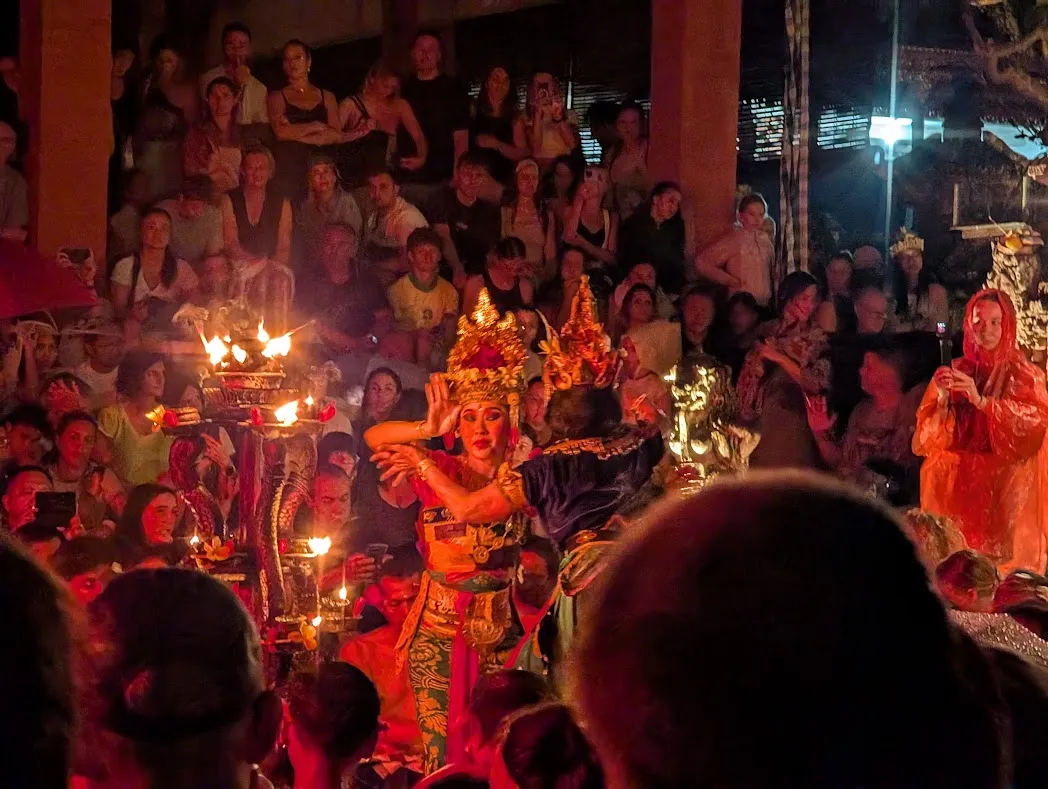
Kecak is pretty interesting; the whole time there were probably three dozen men usually sitting in a circle around the main dancers, singing a capella polyrhythms. It was kind of mesmerizing. Let’s see if I can embed a video in a blog post in the year 2025.
It started pouring rain during the show; Balik came in and handed us ponchos and left again. More on that later as well, but suffice to say: I am simultaneously grateful that there’s someone on this trip that is taking such good care of us and a little weirded out by this fact.
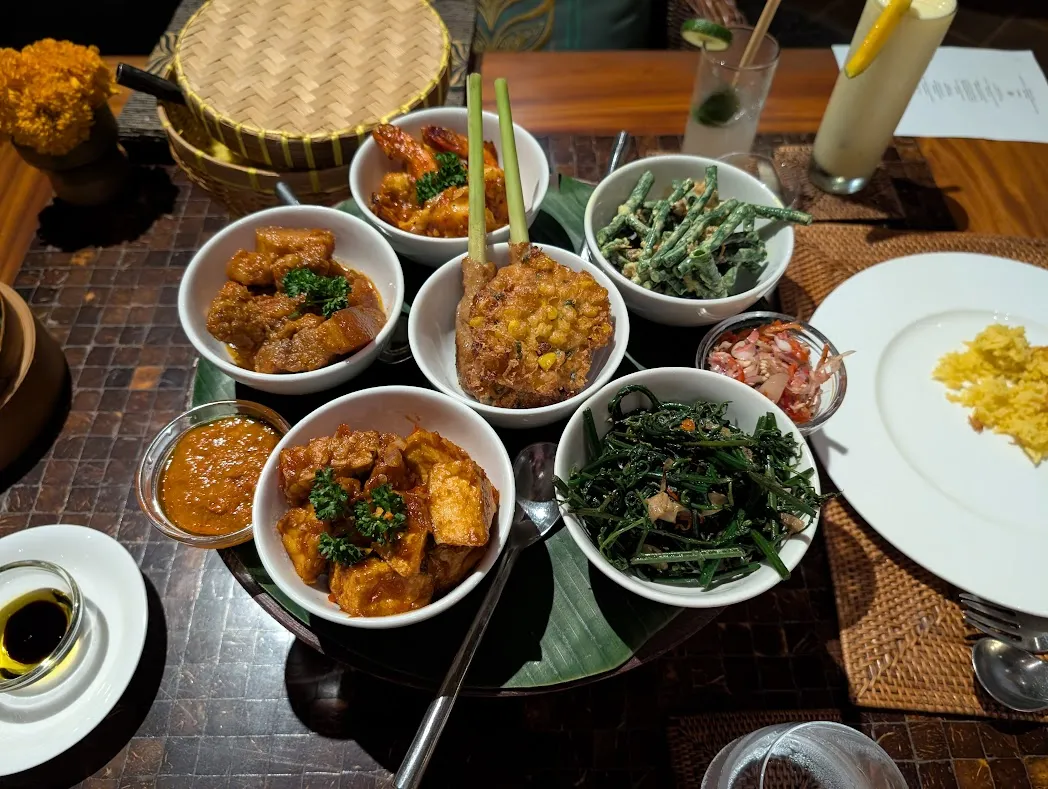
After the dance, we headed over to Tanah Gajah for an even more deluxe version of what we had for lunch.
And that was Saturday. I write this Sunday night after an exhausting additional day of more sightseeing. Tomorrow is more relaxed (a cooking class), so maybe I’ll get caught up to realtime then. No promises.
Conversation happens inside — sign in to Overstory to read and write comments.